IIFT International Business and Management Review Journal

Omera Yusuf1 and Ekanto Ghosh1
1Ashoka University, Sonipat, Haryana, India

Creative Commons Non Commercial CC BY-NC: This article is distributed under the terms of the Creative Commons Attribution-NonCommercial 4.0 License (http://www.creativecommons.org/licenses/by-nc/4.0/) which permits non-Commercial use, reproduction and distribution of the work without further permission provided the original work is attributed.
This case study examines the pivotal scaling decisions faced by the 1M1B (One Million for One Billion) Foundation, a United Nations (UN)-accredited Indian social enterprise founded by former Intel executive Manav Subodh. After early government-backed pilots stalled following a political shift, 1M1B successfully rebuilt its operational model around private and multilateral partnerships (including IBM, Meta, Adobe, Tata Trusts, CBSE and the UN), and now delivers artificial intelligence and digital-skilling programmes to youth across India, while showcasing their solutions via the annual Activate Impact Summit. As the organisation contemplates international expansion and ambitious revenue milestones, its leadership must determine how to continue scaling impact without diluting the mission quality. To address this challenge, this study identifies and analyses 19 critical success factors (CSFs) crucial for scaling social impact organisations, derived from interactions with the founding team, experts and academics. Using Total Interpretive Structural Modelling (TISM), the research develops a hierarchical framework that reveals the complex interdependencies and mutual interactions among these CSFs, providing a systemic understanding of the drivers of successful scale-up. The findings offer significant implications for both practitioners and academicians by presenting a comprehensive, empirically grounded model of CSFs for scaling social enterprises. The hierarchical framework guides decision-makers to focus strategically on the main drivers requiring immediate attention, while the TISM methodology itself provides a robust mechanism for conducting exploratory research in social entrepreneurship. By mapping the hierarchical interrelationships among 19 CSFs, the study equips social enterprise leaders with a strategic roadmap to prioritise high-driving factors (e.g., founder vision and adaptive crisis management) and systematically scale impact without mission drift.
Social entrepreneurship, scaling impact, critical success factors, Total Interpretive Structural Modelling, cross-impact matrix multiplication applied to classification, India, digital skilling
Introduction
India, with over a billion people navigating complex socio-economic challenges, has emerged as one of the world’s most significant hubs for social entrepreneurship. With approximately 2 million social enterprises operating across the country, India presents both an unparalleled scale of need and an extraordinary laboratory for mission-driven innovation (Advaita et al., 2017). However, the path from founding to sustainable impact is notoriously difficult: a report by the IBM Institute for Business Value and Oxford Economics found that 90% of Indian startups fail within their first 5 years, often attributed to limited innovation capacity or the absence of distinctive, scalable business models.
Social enterprises face a compounded challenge. Unlike purely commercial ventures, they must simultaneously preserve mission integrity while achieving the operational scale necessary for lasting change. This dual mandate creates a tension between depth and breadth, and between the bespoke, community-rooted approaches that generate genuine impact and the standardised, replicable models required for growth. Investors and philanthropists are increasingly directing capital towards organisations that can navigate these competing logics successfully (Advaita et al., 2017), yet the academic and practitioner literature offers limited empirically grounded guidance on how social enterprises in developing economies can do so. The question remains: how can social entrepreneurs scale their impact while staying focused on meaningful change?
The 1M1B (One Million for One Billion) Foundation presents a compelling case for examination. The 1M1B Foundation was founded by Manav Subodh, an ex-Intel executive, who was deeply inspired by the potential of youth to drive change in society, particularly in areas of education, sustainability and social entrepreneurship. 1M1B Foundation, starting out in 2014, has evolved as a pioneering non-profit focused on empowering students with digital and artificial intelligence (AI) skills while supporting the development of sustainable economic opportunities. This case study examines the organisation’s journey from inception to current operations, including people management efforts, detailing key transitions across sectors and the vital role of partnerships in the realm of social entrepreneurship. The study will also look into how 1M1B tackles the problem of scaling by incorporating and understanding the importance of AI in the future, thus offering rich insights into the conditions, decisions and organisational capacities that enable social enterprise scale-up.
The study offers a systemic approach to evaluate and study key critical success factors (CSFs) that can enable the scale-up of a social impact organisation like 1M1B. It attempts to develop an interrelationship framework for the scale-up of 1M1B. A total of 19 CSFs have been identified through interactions with the founding team, experts and academicians. Total Interpretive Structural Modelling (TISM) and cross-impact matrix multiplication applied to classification (MICMAC) analysis have been used for analysing the inter-relationships among these enablers.
The objectives of the analysis are as follows:
Finally, conclusions and future scope of research are discussed towards the end.
Review of Literature
Social Entrepreneurship: Conceptual Foundations
Social entrepreneurship has attracted substantial academic attention over the past two decades, yet scholars continue to debate its definitional boundaries. Dees (1998) offers one of the earliest and most influential characterisations, describing social entrepreneurs as ‘change agents in the social sector’ who adopt a mission to create and sustain social value, recognise and relentlessly pursue opportunities to serve that mission, engage in continuous innovation and adaptation, and exhibit heightened accountability to the constituencies they serve and the values they espouse. This framing distinguishes social entrepreneurship from both commercial entrepreneurship (where value creation is primarily financial) and conventional non-profit management (which may lack entrepreneurial dynamism).
Austin et al. (2006) extend this foundation by situating social entrepreneurship within a broader opportunity-recognition framework, arguing that the key distinction lies in the nature of the market failure being addressed rather than the legal form of the organisation. Their comparative framework highlights how social entrepreneurs must navigate resource mobilisation, legitimacy-building and value-chain construction under conditions of market failure, conditions that fundamentally shape scaling strategy. Zahra et al. (2009) further distinguish between social bricoleurs (addressing local needs with available resources), social constructionists (filling institutional voids), and social engineers (challenging systemic conditions), a typology with direct implications for the mechanisms through which each type can scale.
In the Indian context, social entrepreneurship has been shaped by distinctive institutional conditions, including a large informal economy, heterogeneous regulatory environments across states, a deep tradition of community-based self-help, and increasing corporate engagement through mandated Corporate Social Responsibility (CSR) expenditure under the Companies Act 2013. Mair and Martí (2006) argue that institutional context is not merely a backdrop for social entrepreneurship but actively constitutes the opportunities available and the forms of organisation that can survive, a point that is acutely relevant to 1M1B’s experience of government dependency, political exposure, and subsequent pivot to private sector anchoring. This will be elaborated upon in the parts to come.
Scaling Social Impact: Theoretical Perspectives
The question of how to scale social impact has generated substantial and growing literature. Dees et al. (2004) distinguish between scaling impact (reaching more beneficiaries or deepening outcomes) and scaling the organisation (growing revenues, staff or geographic footprint), noting that these are not synonymous and that conflating them leads to mission drift. Their framework identifies three primary pathways: dissemination (sharing approaches for others to replicate), affiliation (creating networks of semi-independent organisations under a common brand or set of standards) and branching (direct organisational expansion into new geographies).
Bradach (2003) focuses on the tension between programme fidelity and local adaptation in scaled social enterprises, arguing that organisations face a fundamental trade-off between standardisation (which enables replication and quality control) and customisation (which ensures relevance to local contexts). This tension is reflected in 1M1B’s hub-and-spoke model, where central curricula are locally adapted by chapter leaders and trainers. Bloom and Smith (2010) propose a set of organisational drivers of social impact scaling, staffing, communicating, alliance-building, lobbying, earnings generation, replicating and stimulating market forces (the SCALERS model), offering a multi-dimensional lens that complements the CSF approach adopted in this study. Mohan (2018) provides India-specific perspectives on scaling social enterprises, emphasising the critical role of technology adoption, the management of political and regulatory relationships, and the cultivation of patient capital from impact investors. The author notes that Indian social enterprises disproportionately struggle with human capital, that is, attracting and retaining talent willing to accept below-market compensation in exchange for mission alignment. This is a challenge directly reflected in 1M1B’s purposefully lean, mission-driven team structure. More recently, scholars have examined how digital platforms and AI tools are reshaping the economics of social enterprise delivery, potentially lowering the per-unit cost of impact at scale while raising questions about data equity and digital exclusion (David, 2020).
Critical Success Factors in Social Enterprises
The concept of CSFs, first systematised by Rockart (1979) in a management information systems context, has been widely applied to identify the limited number of areas in which satisfactory results will ensure successful competitive performance for the organisation. In social enterprise research, CSF analysis has been employed to examine diverse phenomena, including the success of microfinance institutions (Mersland & Strøm, 2009), the sustainability of social businesses (Yunus et al., 2010), and the effectiveness of public–private partnerships in development contexts.
Yunus et al. (2010) identify mission clarity, self-sufficiency in revenue generation, scalable delivery models, and continuous measurement of social impact as foundational CSFs for social businesses. Nyssens (2006) highlights the importance of multi-stakeholder governance and diverse resource portfolios, drawing on market revenues, public subsidies, and voluntary contributions, as distinguishing characteristics of resilient European social enterprises. These perspectives align with 1M1B’s emphasis on mutual-value partnerships, ecosystem embeddedness and impact-aligned fundraising.
Within the Indian social enterprise context, Advaita et al. (2017) note that CSFs include the capacity to navigate ‘wicked problems’, complex, interdependent challenges with no clear solutions, which require adaptive management, deep community trust and long-time horizons. The identification of CSFs through participatory methods, combining founder perspectives, expert opinion and academic validation, represents best practice in exploratory social enterprise research, as the phenomena under study are often context-specific and poorly captured by deductive hypothesis-testing approaches.
Digital Skilling and Artificial Intelligence Education as Social Enterprise Interventions
The rapid diffusion of AI and digital technologies into labour markets has created both new opportunities and new risks for workers in developing economies. In India, this transition is especially consequential given the size and youth profile of the labour force: with over 600 million people below the age of 25, the capacity to equip young people with future-ready skills is both a social justice imperative and an economic development priority.
Research on digital skilling interventions in low- and middle-income countries emphasises several enabling conditions for effectiveness at scale: curriculum alignment with formal education systems (rather than parallel provision), integration of experiential learning alongside conceptual content, attention to digital access disparities (device availability, connectivity and digital literacy prerequisites), and the cultivation of pathways from training to employment or entrepreneurship (David, 2020; Subodh, 2024a).
Bridging the digital divide in India requires more than technological provision; it demands pedagogical innovation, teacher capacity-building, and culturally appropriate content in regional languages. Offline-first design approaches, vernacular content development, and community-based delivery mechanisms have been identified as CSFs for reaching rural and marginalised populations (David, 2020).
Interpretive Structural Modelling and Total Interpretive Structural Modelling in Management Research
Interpretive Structural Modelling (ISM), first developed by Warfield (1974), is a well-established methodology for understanding complex systems by transforming unclear and poorly articulated mental models into visible and well-defined models through a group-learning process. The method begins with the identification of system variables, establishes contextual relationships between them through expert judgement and derives a hierarchical structural model that reveals the relative positioning and interdependencies of variables. ISM has been applied in diverse management research contexts, including supply chain management, quality management and sustainability assessment (Talib et al., 2011).
TISM, introduced by Sushil (2005), extends ISM by adding an interpretive layer that captures the rationale behind each relationship, not just its existence and direction. This interpretive dimension is particularly valuable in social enterprise research, where the mechanisms connecting enabling factors are often as theoretically significant as the factors themselves. TISM’s requirement that expert panellists articulate the logic of each relationship produces richer, more actionable insights than conventional ISM.
MICMAC (Matrice d’Impacts Croisés Multiplication Appliquée à un Classement) analysis complements TISM by classifying variables according to their driving power and dependence on other variables (Jena et al., 2016). Variables with high driving power and low dependence are classified as independent (or driver) variables and represent the foundational levers of the system. Linkage variables, with high driving and high dependence, are highly connected and sensitive to change. Dependent variables are outcomes shaped by other factors but exert little independent influence. Autonomous variables, isolated from the main system, are relatively unimportant. Together, TISM and MICMAC provide a powerful exploratory toolkit for mapping the architecture of complex managerial and social phenomena.
Case Study on One Million for One Billion Foundation
Organisational Context: The One Million for One Billion Journey
Genesis and Inspiration: The Intel Years
Manav Subodh, founder of 1M1B, spent 17 years in the corporate sector working with organisations such as Ernst & Young, Hughes and Quality Assurance Institute, culminating in a prominent 10-year tenure at Intel Corporation (NextBillion, 2018; Rao, 2024). Serving as Intel’s Global Entrepreneurship and Innovation Director, he managed a $10 million funding programme focused on scaling initiatives across 30 countries (Rao, 2024; Subodh, 2013). His role was central to bringing technological and entrepreneurial solutions to underserved communities, often in politically and economically sensitive areas. Through initiatives like the Intel Youth Enterprise Programme, Subodh worked directly with youth in the Middle East and Africa to provide constructive pathways away from local conflict (Warrier, 2025). His firsthand experiences delivering these programmes, particularly in Cairo during the Arab Spring, provided him with a critical understanding of the transformative potential of grassroots technology and entrepreneurship (Rao, 2024). This period served as the catalyst for him to leave his corporate career to launch 1M1B, sparking a lifelong mission to enable institutional change in regions with limited opportunities (NextBillion, 2018; Warrier, 2025).
Another factor that contributed to his sensitivity towards grassroots-level development was his exposure to rural life through his maternal grandfather’s experiences as a farmer in India, which deeply influenced his vision. This exposure instilled an understanding of grassroots struggles and the need for community-focused development. Inspired by these dual influences of a global corporate exposure and a rural India experience, Subodh began conceptualising community-based initiatives during weekends, ultimately setting the stage for the 1M1B Foundation (see Exhibit 1).
Early Stages and Strategic Shift: The Launch of One Million for One Billion in India (2014)
In January 2014, recognising the potential for grassroots impact, Subodh left his corporate role to establish the 1M1B Foundation (Entrackr, 2018). The organisation’s goal was to aid entrepreneurship and technological training in India’s rural areas, initially anchoring its efforts in Andhra Pradesh. Early on, the foundation established critical partnerships and connections with government officials, notably with then Chief Minister N. Chandrababu Naidu, who supported the development of a ‘Smart Village’ framework designed to attract investments and technologies, including solar initiatives from Japanese firms, to Indian villages (Business Standard, 2015; Entrackr, 2018). 1M1B adopted novel approaches, such as a ‘co-creation model’, using a horizontal pyramid approach to connect the underprivileged directly with corporate ecosystems. Subodh characterised this method as a pragmatic ‘business model development exercise’ tailored to execute at the last mile (Entrackr, 2018).
However, the initiative encountered a significant setback in 2019, when a political shift in the state government led to a withdrawal of institutional support. Navigating months without government funding, the 1M1B Foundation adapted by securing strategic partnerships with private entities, most notably Tata Trusts, to sustain its rural entrepreneurship and skilling initiatives, subsequently expanding its geographic outreach into Tamil Nadu and Karnataka (Entrackr, 2018; India Today, 2025). Through these efforts, 1M1B developed a more resilient, market-insulated operational model by prioritising corporate and private-sector partnerships over public funding, a strategic pivot that allowed the organisation to maintain its growth trajectory independently (India Today, 2025).
Redefining Impact and Purpose: The Focus on Digital Skilling and Artificial Intelligence (2019 Onwards)
With increasing recognition of AI and digital skills as critical drivers of future economic opportunities, the 1M1B Foundation has incorporated AI skilling programmes for K-12 students, emphasising the development of problem-solving skills over rote memorisation (IRCAI, 2021). The organisation crafted a curriculum centred around future job requirements and creating equal access to digital careers, particularly for students in underprivileged communities. This landmark initiative helped it establish relationships with major Central Board of Secondary Education (CBSE) schools in India with a running AI curriculum.
In collaboration with IBM and CBSE, 1M1B launched the AI Youth Skills Programme in 2019 to integrate AI and digital skills into the K-12 curriculum (IBM, 2020). The programme equips students with hands-on AI competencies and problem-solving skills, enabling them to create real-world solutions to community challenges. Embedded within CBSE’s Social Empowerment through Work Education and Action (SEWA) initiative, the programme promotes innovation and digital literacy across 29 states, empowering over 600,000 students and 20,000 teachers (IBM, 2020; IRCAI, 2021). By targeting marginalised communities and training educators in 3,000+ schools, this partnership ensures inclusivity while cultivating a future-ready workforce capable of leveraging technology for sustainable social impact. Additionally, 1M1B has worked with Meta (formerly Facebook) to introduce augmented reality (AR) and virtual reality (VR) into the CBSE curriculum, aiming to scale these emerging technologies across regional educational networks (PIB Delhi, 2022).
As the organisation grew, 1M1B strategically aligned with the United Nations’ (UN) Sustainable Development Goals (SDGs), earning UN accreditation and establishing itself as a consultative partner to the UN Economic and Social Council (ECOSOC) (UN ECOSOC, 2019). This partnership helped it tip the scales in its favour and amplified 1M1B’s impact globally by providing valuable international exposure and promoting collaborations. Through initiatives like the 1M1B Activate Impact Summit, held annually with the UN Department of Global Communications, the foundation offers young leaders a platform to showcase projects addressing global challenges aligned with the SDGs (India Education Diary, 2025). These summits highlight youth-driven solutions, inspire collective action and nurture essential skills, like public speaking and leadership, further positioning India’s youth as changemakers on the global stage (India Education Diary, 2025).
One notable success story is Manya Joshi, a programme graduate who pursued engineering at Guru Gobind Singh Indraprastha University and began teaching AI skills to juniors and peers, exemplifying 1M1B Foundation’s vision of creating a sustainable cycle of skill-sharing (GGSIPU, 2025; Joshi, personal communication, 2024). Through the organisation, she gained hands-on experience in AI, undertaking an AI-based project that ultimately secured her an internship at IBM Global, a remarkable achievement for a Class 12 student. Today, she proudly serves as a Youth Advisory Member and Youth Lead for AI and Innovation at the 1M1B Foundation, cherishing the profound impact the organisation has had on her life.
My journey with 1M1B has been transformative, shaping me as a youth leader in AI and sustainability. Starting the 1M1B-Indraprastha University chapter at my college and serving as its president allowed me to lead multiple impactful events, fostering innovation and collaboration. From organising a future AI role campaign to hosting an LLM session, mentoring peers on Sundays, and engaging with orphanages to discuss AI and sustainability, each initiative strengthened my commitment to driving meaningful change.—Manya Joshi
Manya, during a conversation, shared that, unlike traditional education systems, which often prioritise textbook knowledge, 1M1B Foundation’s curriculum for Grades 11–12 emphasises experiential learning through real-world projects. This approach bridges the gap between academic concepts and practical implementation, leading to a deeper understanding of AI. To further enhance the curriculum, she suggests incorporating more books that delve into the mechanics of AI, providing a stronger theoretical foundation. For students in Grades 9–10, she recommends integrating project-based learning to create a more balanced curriculum, where both theory and practice receive equal attention.
Students like Manya remain actively involved with the 1M1B Foundation, even after stepping into college, where she leads a 1M1B chapter. This ongoing engagement is strengthened by regular mentorship and structured oversight. The organisation conducts periodic check-ins and requires detailed reports, ensuring smooth operations and consistent support for its members.
Additionally, what truly sets 1M1B Foundation apart is its focus on empowering youth and their skills rather than the existing workforce. On a closer look, while other organisations focused on skills, 1M1B has empowered Manya to think creatively and turn those ideas into tangible outcomes. Young minds, brimming with innovative and untapped ideas, often think outside the box. 1M1B Foundation invests in these ideas, nurturing creativity and enabling students to make a meaningful impact on their future. Furthermore, Manya’s experience underscores 1M1B’s unique emphasis on ideas over existing skills. While other organisations concentrate on refining specific abilities, 1M1B Foundation helps students ideate first and then equips them with the skills required to bring those ideas to life. This approach, coupled with the global nature of the organisation’s team, provides participants with a truly international platform to showcase their potential.
Key Developments in Recent Years
1M1B’s Green Skills Academy with Salesforce took tangible shape in mid-June 2024, when the partners announced the establishment of their first physical centre in Hyderabad, with support from the Government of Telangana (India Education Diary, 2024; The Hindu, 2024). Press coverage at the time emphasised an AI-infused green-jobs curriculum and large-scale skilling ambitions for youth in the state, framing the Academy as a bridge between sustainability goals and future market employability (The Hindu, 2024).
The flagship 1M1B Activate Impact Summit continued its global trajectory at the UN, with the 8th annual edition hosted at the UN Headquarters in New York on 12 December 2024 (Sustainability Karma, 2024). Broadcasted widely via UN Web TV, the session underscored the event’s role as a formally recognised civil society platform where student teams present SDG-aligned solutions and learn to communicate grassroots impact at a global forum (Sustainability Karma, 2024).
In December 2024, 1M1B officially unveiled ‘1.5 Matters’ at T-Works in Hyderabad, a nationwide, youth-first climate action movement focused on restricting global warming to 1.5.png) and converting India’s youth dividend into active climate leadership (The New Indian Express, 2024). Media documentation described a multi-stakeholder coalition approach bringing together state governments, corporations, academia and changemakers, utilising targeted programming like ‘Youth Climate Diplomacy for 1.5’ to groom young climate ambassadors (India Education Diary, 2024; The New Indian Express, 2024).
and converting India’s youth dividend into active climate leadership (The New Indian Express, 2024). Media documentation described a multi-stakeholder coalition approach bringing together state governments, corporations, academia and changemakers, utilising targeted programming like ‘Youth Climate Diplomacy for 1.5’ to groom young climate ambassadors (India Education Diary, 2024; The New Indian Express, 2024).
Around the UN General Assembly’s 80th session in September 2025, 1M1B’s localised programming was integrated within the UN Youth Office’s global #YouthLead Festival, featuring the ‘Youth Voices for Sustainability’ event that spotlighted youth-led climate and future-skills initiatives (UN Youth Office, 2025). These listings positioned 1M1B’s youth showcase alongside core UN-hosted and global partner activities during the festival week.
On the higher-education front, 1M1B and the Institute of Chartered Financial Analysts of India group announced a structural scale-up in 2025, signing a Memorandum of Understanding (MoU) spanning over 10 campuses, with a projected reach of more than 20,000 students to expand job readiness, green skills and leadership programming (ICFAI, 2025). This collaboration signals a definitive university-system strategy to mainstream future-focused skills and experiential learning across multiple institutional locations.
Parallel to these developments, the 1M1B Green Internship gained significant momentum through its 2025 participant cohorts. Participant updates detail a structured, multi-week learning experience covering solar/energy projects, environmental, social and governance and sustainability fundamentals, data-driven problem-solving and corporate mentorship. National media documentation from late 2024 confirmed the programme’s formal launch in collaboration with the All India Council for Technical Education (AICTE), targeting the creation of 100,000 green internships by 2030, with an initial allocation of 10,000 slots in year one (AICTE, 2024). Together, these sources illustrate both the high-level policy commitment and the pragmatic, on-ground learning arc of the internship model.
Salesforce’s mid-2025 India strategic note reinforced this long-term trajectory, explicitly tying the corporate partnership to the public north star of training 1 million young people in green and AI skills by 2030 (Salesforce India, 2025). Finally, the foundational collaborations documented in late 2024 between AICTE and the 1M1B Green Skills Academy on the national Green Internship programme lent necessary regulatory heft, an all-India footprint via AICTE-affiliated institutions, and operational clarity on learning components such as gamified environmental assessments and hands-on sustainability workstreams (AICTE, 2024).
Operations, Partnerships and Scaling Challenges
Partnership Architecture and Impact Measurement
1M1B Foundation’s partnerships with corporations like Tata Trusts and international affiliations with organisations like the UN have been instrumental in sustaining its operations (Entrackr, 2018; UN ECOSOC, 2019). These partnerships have allowed the 1M1B Foundation to scale programmes across multiple regions, leverage funding and expand its network. For instance, in its efforts to establish the Smart Village Accelerator, 1M1B Foundation partnered with corporate technology providers to support local entrepreneurs, offering technological infrastructure that enabled sustainable businesses (Business Standard, 2015).
The organisation’s AI skilling initiative with the Aditya Birla Group, providing micro-internships and exposing students to real-world industry knowledge, has emerged as a blueprint for future strategic partnerships (see Exhibit 2) (Aditya Birla Group, 2024). The programme underscores 1M1B Foundation’s emphasis on experiential learning over traditional degrees, reinforcing a mindset shift towards skills-driven development.
The 1M1B Foundation also collaborates with Adobe to enhance digital creativity among students and educators across India (Adobe India, 2024). Through this partnership, 1M1B trains participants in utilising Adobe tools, such as Adobe Express, enabling them to express their creativity effectively. The programme has trained over 20,000 students and 10,000 teachers, engaging more than 50 schools nationwide (Adobe India, 2024). Participants are encouraged to showcase their projects and participate in challenges, in an engaging and immersive learning environment.
One of the other important elements of partnerships is for both partners to see tangible outcomes, for which measurement becomes a necessary step. 1M1B measures the success of its programmes using tailored metrics (IRCAI, 2021). For mentorship programmes, they track the impact created by students and the ripple effect of those students on others. For client-based programmes (e.g., with Meta or IBM), success is determined through CSR numbers (IBM, 2020; PIB Delhi, 2022). The process involves aligning with clients’ objectives, such as Meta’s structural focus on open-source AI for college students, and collaboratively setting milestones for the year (Meta India, 2025; Subodh, personal communication, 2024b).
1M1B’s unique philosophy involves choosing partnerships that are engaging and enjoyable. An interesting element to this is that, even if a client partnership offers good numbers, they avoid projects that are misaligned with the mission and resource efficiency. The team also strives to interconnect projects to minimise duplication and maximise overall impact.
Human Capital, Trust and Organisational Culture
1M1B’s scaling journey has not been without distinct operational hurdles. The organisation faced systemic issues in building a core team driven by organisational purpose rather than purely monetary incentives, and initially struggled to attract human capital that fully resonated with the foundation’s long-term vision of social transformation. Maintaining high levels of trust with grassroots community stakeholders became essential, especially during funding disruptions. For instance, when a funding partner unexpectedly withdrew from an active AI deployment, the 1M1B Foundation directly leveraged its institutional relationships with IBM to explain the resource gap, effectively securing renewed support. Fortunately, the founder’s extensive corporate background at Intel Corporation proved invaluable in navigating these complex multi-stakeholder relationships, reinforcing an organisational culture of transparency and authenticity across 1M1B’s daily operations (Rao, 2024).
Saffin Mathew, the Programmes Director at 1M1B, oversees the core programmatic portfolio and strategic corporate partnerships, leading high-priority initiatives while managing decentralised teams to ensure operational consistency (Nationwide Awards, 2021). Managing an agile team of approximately 30 members anchored primarily in Bangalore, Mathew prioritises highly structured communication protocols to streamline workflow (Great Place to Work India, 2024). To optimise productivity, the internal team utilises a mandatory weekly alignment call every Monday; during this touchpoint, each team member is allotted a strict 5-min window to articulate upcoming weekly objectives, outline highlights from the preceding week, and isolate specific bottlenecks requiring direct managerial intervention. This lean, structured approach ensures absolute operational clarity.
One of the primary administrative challenges Mathew navigates is the friction of managing a comparatively small, centralised team saddled with a significant, multi-state workload. Within this lean personnel architecture, any single team member’s absence places an immediate, compounding strain on the remaining staff. To mitigate this vulnerability, management actively encourages personnel to cultivate cross-functional agility by taking on additional operational responsibilities and driving independent initiatives, thereby reducing institutional reliance on top-down oversight.
To build internal camaraderie and mission alignment, the 1M1B Foundation utilises targeted team-building interventions, anchored by a comprehensive annual strategy meeting held each January in Bangalore to establish organisational milestones for the fiscal year. To further solidify internal cohesion, management recommends introducing recurring casual activities to strengthen horizontal employee bonds alongside structured performance-linked incentives for teams successfully executing critical milestones. Ultimately, a defining sentiment that pervades the organisation is that tightly aligning internal operational objectives with the personal values of the staff not only solidifies deep-seated trust with rural and youth beneficiaries but also serves as the primary mechanism for attracting purpose-driven talent over market-driven incentives.
Scaling Challenges and Strategic Responses
When it comes to scaling, it is imperative for an organisation to think about how it can stay relevant in the future. Their primary aim must be to rid society of the social issue that they are concerned with, for which the organisation needs to keep adapting to changing contexts and trends to be effective with deliverance. Scaling the organisation is necessary so as to ensure that the enterprise’s impact is long-lasting and robust (Mohan, 2018).
In terms of delivery and 1M1B Foundation’s scalability, Manav emphasises the importance of AI, especially in rural classrooms. There are two sides to this coin. Incorporating technological innovations, such as digital platforms and AI-driven tools, can significantly reduce costs and improve efficiency. However, these innovations must be practical and adaptable to the beneficiaries’ realities, ensuring that they are accessible and usable for communities with limited digital literacy. Bridging the digital divide and ensuring accessibility is an ongoing challenge (David, 2020). In his article (Exhibit 3), he highlights potential misuses of AI, including data privacy and students relying on AI tools like ChatGPT, and also looks into the benefits of AI in education like facilitating personalised learning and bridging education gaps. He understood this at the early stages of the formation of the company and made sure that the 1M1B Foundation is focused on social innovations and future skills. In 2020, the organisation announced India’s First AI Youth Lab. An Indian Express correspondent, in an article, explains why Manav incorporated this idea into the workings of the 1M1B Foundation (see Exhibit 3). He initially encouraged students to ideate projects that could positively impact the lives of 10 people, and soon he realised that, by using AI, the impact can be scaled up by multiple factors, leading to the opening of the AI youth lab (David, 2020).
As the organisation scales, maintaining programme quality across diverse regions becomes increasingly complex. Ensuring the consistency of impactful delivery while expanding to new geographies requires meticulous planning and oversight. Rapid scaling efforts also risk diluting the quality and depth of the programmes, which may undermine the intended impact if not addressed proactively.
Another significant hurdle is cultural and regional diversity. Each region has its unique language, cultural norms and socio-economic context, which necessitate adaptation of programmes to local needs without compromising the foundation’s core mission. Furthermore, navigating differing local regulations and governance frameworks can slow down or complicate expansion efforts, requiring careful coordination with local stakeholders.
Monitoring and evaluation at scale is critical to ensure the effectiveness of 1M1B’s programmes, but it presents its own set of challenges. Maintaining robust systems to measure impact and outcomes consistently across multiple locations is a resource-intensive process. The complexities of collecting, managing and analysing data from diverse geographies often require advanced tools and methodologies to ensure accuracy and comparability.
Establishing and managing partnerships and collaborations is another pivotal aspect of scaling for 1M1B Foundation, which is how it is integrating itself into an existing system of education, and hence ensures that its impact stays stable. The foundation depends on strategic alliances with corporations, governments and local communities to drive its initiatives. However, aligning the interests and expectations of various stakeholders with 1M1B’s mission and values can be challenging, requiring constant negotiation and relationship management.
There is an ongoing debate about how AI can lead to unemployment, especially in a developing country like India. 1M1B focuses on skilling the youth in urban areas, who then create an impact on those in rural areas, making them equipped for occupations in the future. AI is integrated into many disciplines, and hence, it is imperative for the youth to be skilled in it, which 1M1B helps in implementing. Hence, the question of rising unemployment is being addressed as the future is AI, and the youth should be accustomed to it.
Methodology—Quantitative Framework
Critical Success Factors
The following 19 CSFs were identified analytically through iterative expert consultation, talking to stakeholders and validated against 1M1B’s operational experience. The starting point was an extensive review of existing literature on social entrepreneurship, scaling theory and CSF frameworks; drawing on foundational works by Dees (1998), Austin et al. (2006), Bloom and Smith (2010), and India-specific scholarship by Mohan (2018) and Advaita et al. (2017). This established the theoretical scaffolding and sensitised the research team to the categories of factors likely to be relevant in a developing-economy, digital-skilling context.
This was then grounded in primary fieldwork, conducted in-depth interactions with three distinct groups: the 1M1B founding team, domain experts familiar with social enterprise scaling in India, and academicians with expertise in organisational research and interpretive modelling. These consultations were iterative rather than one-shot, followed by returning to participants across multiple rounds to refine, challenge and consolidate the emerging list of factors. The mode of inquiry was explicitly exploratory and inductive. Rather than testing a pre-specified hypothesis, the research team allowed CSFs to emerge from the convergence of three sources: what the founding team identified as operationally decisive, what experts recognised as structurally significant across comparable organisations, and what the academic literature flagged as theoretically grounded. Factors that appeared consistently across all three sources were retained; those specific to only one perspective were either reframed or discarded.
Each candidate CSF was then validated against 1M1B’s documented operational experience; cross-checked against programme records, partnership histories and crisis responses, to ensure that the factors were not merely theoretically plausible but demonstrably present and consequential in the organisation’s actual trajectory. This dual grounding in theory and lived experience is what distinguishes the final list of 19 CSFs from a generic checklist: each factor carries a specific organisational referent within 1M1B’s journey.
Strong Founder Vision
Manav Subodh’s founder vision blends Fortune-50 discipline with village empathy. At Intel, he ran entrepreneurship programmes in more than 30 countries, including the Arab world, Intel Youth Enterprise, seeding conviction in scalable, locally tuned change. In 2014, he launched 1M1B; the Andhra Pradesh Smart Village Accelerator fused corporate tech (solar pilots) with rural co-creation, attracting Japanese solar pilots and institutionalising a ‘co-creation’ model that takes business-model design to the last mile. After a 2019 funding shock, he pivoted from state dependence to resilient corporate alliances while doubling down on future skills. That execution engine matured via national platforms: the IBM-CBSE AI Youth Skills Programme (since 2019) now spans 29 states, reaching 600,000+ students, 20,000+ teachers and 3,000+ schools. UN ECOSOC accreditation and the annual 1M1B Activate Impact Summit give youth projects a global stage. The Green Skills Academy, built with Salesforce and the states of Telangana/Meghalaya, channels climate talent into T-Hub internships and UN showcases, with a 2024 expansion to 70,000 students. Together, corporate-grade execution, UN legitimacy, and grassroots co-design make Subodh’s vision both scalable and durable.
Mutual Value in Partnerships
1M1B’s alliances with Meta, IBM, Adobe, Tata Trusts and CBSE are built to deliver outcomes for both the community and the partner, co-defining goals, metrics and milestones rather than ‘tick-the-box’ CSR. Measurement is co-created: mentorship programmes track ripple effects; client programmes (e.g., Meta, IBM) are assessed on agreed CSR indicators and annual milestones. With CBSE, 1M1B integrates content inside the K-12 system (SEWA), keeping relevance high for students and educators. Adobe enables creative confidence at scale through Express-led digital storytelling. IBM brings authentic industry exposure via internships that convert classroom projects into workplace experiences. Meta partnerships expand digital citizenship and safety, aligned with government and global frameworks and localised in regional languages to reach rural audiences. Tata Trusts support reinforced resilience during a policy shift, anchoring rural entrepreneurship beyond government funding. Across partners, 1M1B emphasises immersive learning and virtual internships with multinational corporations, creating mutual, sustained value.
Private Sector as an Anchor
When Andhra Pradesh withdrew support in 2019, 1M1B endured 6 months with no state funding, then rebuilt around private allies. Tata Trusts and other corporate partners became the ballast, with Bengaluru positioned as the skilling hub and outreach extended into Tamil Nadu and Karnataka. The shift swapped political volatility for multi-year, contract-backed programmes and a more resilient operating model centred on private partnerships. On the ground, the Marsur Career Readiness Centre and village-level training cohorts around Bengaluru exemplify this anchor strategy, moving youth and women from short courses to job placements. Long-horizon CSR collaborations, such as a 6-year employability programme with Aditya Birla Fashion & Retail across Karnataka, Andhra Pradesh and Tamil Nadu, translate partner balance sheets into local livelihoods. Partnerships also bring technical infrastructure and regional scale, reducing dependence on government cycles.
Adaptive Crisis Management
1M1B executed a 6-month reset following the pulling back of funds from Andhra Pradesh: winding down the state-anchored ‘smart village accelerator’, shifting budgets and teams to a private-partner model, and redeploying operations out of Bengaluru while extending delivery into Tamil Nadu and Karnataka. The programme architecture itself was reframed from a government-led accelerator to modular ‘Grassroots Initiatives’ that could spin up quickly in new districts: a 30-h Career Readiness curriculum, a Women Empowerment track, and a Digital Equaliser for underserved high-schoolers. By standardising playbooks (e.g., short, stackable training blocks and local market linkages), 1M1B preserved continuity for learners while insulating delivery from politics. The organisation also institutionalised fast feedback, openly sharing wins and failures at national and UN forums, so field insights informed rapid course-corrections.
Strategic Global Alliances
UN recognition turned 1M1B’s youth engine into a global movement. With special consultative status with UN ECOSOC and association with the UN Department of Global Communications, 1M1B gained credibility and access to multilateral platforms, vital for mobilising youth coalitions and building cross-border partnerships. The flagship 1M1B Activate Impact Summit at UN Headquarters functions as a yearly launchpad where Indian youth present solutions explicitly framed by the SDGs, translating classroom innovation into international advocacy. Seven editions have spotlighted changemakers and drawn support from Permanent Representatives, reinforcing institutional legitimacy and widening donor and partner interest. Beyond the Summit, 1M1B’s presence at UNGA79, the UN Civil Society Conference, and AI for Good embeds young innovators within global dialogues, multiplying pathways for collaboration and resources. The Impact Compendium’s release in the ECOSOC Chamber, presented to UNDGC (United Nations Department of Global Communications) and ECOSOC representatives, further systematises learnings and signals accountability to international stakeholders.
Real World Impact Projects
1M1B emphasises youth-led projects addressing local issues using AI, digital literacy, sustainability and entrepreneurship, creating ownership, empowerment and replicability. This experiential model boosts confidence, scaling and sustained engagement, transforming beneficiaries into ambassadors and mentors. 1M1B’s model is intentionally experiential, as teens identify local problems, build solutions and ship them, then the strongest are showcased at the annual Activate Impact Summit at the UN Headquarters, giving youth global visibility and standards to work towards.
Concrete community outcomes anchor learning:
Additionally, the Future Leaders Programme has culminated in select youth presenting impact projects at the Diana Award, among other forums. Across Youth Leadership tracks (Future Leaders, Purpose Academy), 1M1B has created 1,000+ youth leaders and raised $1M+ for student projects, evidence that hands-on work converts to durable pipelines of talent and capital. Global aspiration stays grounded as hundreds of Indian youth have earned UN exposure (200 Youth Ambassadors), but each project begins with community interviews, constraints and practical budgets, skills students carry into higher education and early careers.
Future-ready Skills Emphasis
1M1B hardwires employability into its mission by aligning programmes with CBSE/National Education Policy and national skilling priorities, partnering directly with ministries and nodal agencies so schools can plug offerings into existing timetables and credentials. This alignment makes 1M1B’s programming relevant, government-aligned and future-resilient, enabling widespread school adoption and long-term impact potential. Future resilient focus areas also mirror growth roles flagged by the World Economic Forum/LinkedIn and the International Labour Organisation’s green-jobs push, ensuring relevance to the fourth industrial revolution and the net-zero transition.
Stacked pathways:
Interconnected Programme Architecture
1M1B designs a woven portfolio where programmes reinforce one another instead of operating as silos. The AI Youth Skills track supplies a project-based backbone inside schools, moving learners from concepts to prototypes within CBSE timetables. Graduates step into leadership pipelines such as Future Leaders, where selection, mentoring and showcases turn prototypes into community ventures and entrepreneurship. Sustainability depth is layered through the Green Skills Academy and allied green internships, giving students work-based pathways to apply AI and data skills to climate and circularity challenges with industry and state partners. Digital citizenship is normalised across classrooms via Digital Nagrik, creating the safe-use norms (safety, privacy, misinformation) that other tech programmes rely on. Emerging-tech modules, AR/VR and metaverse readiness plug into this spine to extend creative prototyping and communication without duplicating core AI outcomes. Finally, the Activate Impact Summit at the UN Headquarters serves as the integrator: a shared, high-stakes stage where student teams present SDG-aligned outcomes to diplomats, partners and media, driving common rubrics, external validation and partner pipelines.
Ecosystem Management
1M1B scales by embedding inside existing systems, not running parallel programmes. Its AI and digital-skills work is woven into CBSE’s SEWA framework, letting schools timetable activities across subjects and across India’s states, building legitimacy and durability rather than one-off workshops. This ‘in-system’ strategy also enables distribution at a national scale: the AI Youth Skills Programme is available in 25,000+ schools with trainers, challenges and internship pathways baked into school routines.
Decentralised Programme Models
1M1B scales through a hub-and-spoke model: national curricula along with localised delivery. College chapters anchor youth leadership and event delivery on campus, creating regional ownership while staying on a shared playbook. Quality is held with periodic check-ins and required reports, ensuring fidelity to core frameworks even as tactics localise. Local programme managers/chapters tailor content (tribal institutions, district centres) while central guardrails, such as for labs, mentoring cadence and reporting, to preserve consistency, culture and measurable outcomes.
How this shows up on the ground:
Scalable Curriculum Models
1M1B’s curricula are built as modular ‘stacks’ that combine Innovation Readiness with AI Competence, making the content plug-and-play across schools while preserving core outcomes. Delivery is trainer-led, embedded in CBSE’s SEWA framework, so AI becomes a cross-curricular method rather than a standalone subject. This is key to fidelity at scale. The programme is institutionally integrated and available in 25,000+ schools, providing a ready distribution rail for rapid replication.
Hands-on Artificial Intelligence Curriculum in Classrooms
1M1B mainstreamed experiential AI by embedding it inside formal systems rather than treating it as a standalone subject. With CBSE and IBM, 1M1B launched the AI Youth Skills Programme in 2019, positioning AI as a cross-curricular, project-based skill delivered through CBSE’s SEWA framework, making classroom adoption simple and systemic. 1M1B also created visible anchors for hands-on learning: in 2020, it announced India’s first AI Youth Lab, signalling a shift from theory to doing and catalysing rapid school-based experimentation. Crucially, ‘hands-on’ spans emerging tech and sustainability, not just coding. Students prototype with AI, AR/VR and creative digital tools, and many projects target climate and civic challenges, linking skills to real community outcomes. Finally, the pipeline extends into higher education: university students develop and showcase AI/AR innovations alongside school cohorts, reinforcing a school-to-college continuum of practice.
Digital Accessibility Tools
1M1B designs for India’s connectivity realities, using offline-friendly assets and regional languages so rural and urban students can learn equitably. In Digital Nagrik, content is translated into Hindi, Telugu and Kannada and delivered through formats that work even when bandwidth is patchy; classroom posters, skits and locally shared vernacular videos so families and communities can participate, not just students. The approach extends to hands-on projects: for a low-cost water-filtration initiative in rural Andhra Pradesh, students produced how-to videos in English and Telugu so that the solution could spread in local schools and villages. At scale, Digital Nagrik has engaged 5 million students and 500,000 educators across 26 states, anchoring access in mainstream systems while aligning with UNICEF/ITU digital inclusion norms. For under-resourced classrooms, the Digital Equaliser stream brings AI and digital literacy to high-schoolers from marginalised communities.
Student-led Initiatives
1M1B’s engine is youth leadership and not just participation. Students form campus chapters, run peer training, and step into formal advisory roles, ensuring programmes persist beyond graduation. Example: Manya Joshi launched the 1M1B–Indraprastha University chapter, mentored peers weekly, and now serves as a Youth Advisory Member and Youth Lead for AI and Innovation, illustrating alumni-to-leader continuity. Ownership leads to replication as alumni return as mentors and chapter leads, creating a multiplier effect rather than one-off workshops. Manya Joshi progressed from student to Youth Advisory Member and college chapter president, mentoring peers weekly and running AI sessions, is proof of the ‘beneficiary-to-ambassador’ loop.
Purpose-driven Team
1M1B’s operating muscle is a lean, mission-aligned team recruited for purpose over pay. Leadership interviews note the explicit challenge and choice of building a team ‘driven by purpose, rather than monetary incentives’, anchoring hiring and culture in long-term social impact rather than remuneration.
Continuous Feedback Culture
1M1B’s operating cadence is built for transparency and speed. The Programmes Director, Saffin Mathew, runs a weekly ‘Monday call’ where each of ~30 team members gets ~5 min to outline this week’s tasks, last week’s highlights, and any interventions needed, a simple ritual that surfaces blockers early and keeps execution tight. The practice is explicit: it is a structured, time-boxed forum to maximise clarity and productivity across a lean team. Beyond the core staff, 1M1B maintains periodic check-ins and required reports for youth chapters and programme cohorts, creating a common rhythm without stifling local initiatives, useful as programmes expand across institutions and regions. The feedback loop is anchored in a culture of transparency and authenticity, reflected in leadership’s stakeholder management and open communication during setbacks. This cadence is beyond cosmetic; it is a response to scale constraints. With a small team handling a significant workload, any absence strains capacity, so disciplined weekly check-ins and ‘ask-for-intervention’ prompts are how the organisation stays responsive while growing. Strategically, 1M1B frames the next decade around reinvention and convergence, purpose, people, platforms and planet, so operational feedback translates into programme evolution, not just status updates.
Visionary Fundraising Approach
1M1B frames revenue as a means to mission, not an end. Leadership explicitly ties milestone budgets (e.g., .png) 25 Cr and onwards) to impact expansion, international exposure for students, new geographies and programme scale, treating topline as fuel for outcomes.
25 Cr and onwards) to impact expansion, international exposure for students, new geographies and programme scale, treating topline as fuel for outcomes.
Lean, Flexible Team Structure
1M1B runs as a ~30-person, cross-functional unit optimised for speed and geographic spread. The Programmes Director simultaneously oversees programmes and corporate partnerships, signalling role fluidity at the core; a weekly, time-boxed ‘Monday call’ (~5 min per person) keeps priorities, wins and escalation needs visible for rapid decisions.
Scaling with Fidelity
1M1B scales by pairing non-negotiable standards with adaptive, local delivery. Quality is guarded upstream through co-created, programme-specific metrics (e.g., ripple-effect tracking in mentorships) and CSR-aligned indicators with annual milestones for client programmes, so outcomes are comparable across states and partners.
The final list of CSFs identified is presented in Table 1.
Research Methodology
The study has been conducted in three steps:
The fundamental phase of organisational research is to develop a conceptual framework from the exploratory study. The methodology of ISM is an interactive learning process. In this, a set of different and directly related variables affecting the system under consideration is structured into a comprehensive systemic model. The beauty of the ISM model is that it portrays the structure of a complex issue of the problem under study, in a carefully designed pattern employing graphics as well as words. It is an influential tool that converts a weakly articulated mental model into a visible and well-defined model (Sushil, 2005). It is an interactive learning process and improves the sequence as well as the direction of any relationships among factors. It develops a graphical picture for a particular system of a field under study and helps in determining critical areas to be focused on (Talib et al., 2011).
Table 1. Final List of Critical Success Factors (CSFs) Identified for the Scale-up of One Million for One Billion (1M1B).

Note: AI: Artificial intelligence.
The ISM methodology is interpretive from the fact that the judgement of the group decides whether and how the variables are related. It is structural too, as on the basis of the relationship, an overall structure is extracted from the complex set of variables. It is a modelling technique in which the specific relationships of the variables and the overall structure of the system under consideration are portrayed in a digraph model. ISM is primarily intended as a group learning process, but it can also be used individually. The various steps involved in the ISM methodology are as follows:
Step 1: Variables affecting the system under consideration are listed, which can be objectives, actions and individuals, among others.
Step 2: From the variables identified in Step 1, a contextual relationship is established among variables with respect to which pairs of variables would be examined.
Step 3: A Structural Self-interaction Matrix (SSIM) is developed for variables, which indicates pairwise relationships among variables of the system under consideration.
Step 4: A reachability matrix is developed from the SSIM, and the matrix is checked for transitivity. The transitivity of the contextual relation is a basic assumption made in ISM. It states that if a variable A is related to B and B is related to C, then A is necessarily related to C.
Step 5: The reachability matrix obtained in Step 4 is partitioned into different levels.
Step 6: Based on the relationships given above in the reachability matrix, a directed graph is drawn, and the transitive links are removed.
Step 7: The resultant digraph is converted into an ISM by replacing variable nodes with statements.
Step 8: The ISM model developed in Step 7 is reviewed to check for conceptual inconsistency, and necessary modifications are made.
Structural Self-interaction Matrix
The SSIM was constructed through a structured expert judgement process, consistent with the ISM/TISM methodology as formalised by Warfield (1974) and extended by Sushil (2005). Once the 19 CSFs were finalised, the research team established a contextual relationship of the ‘leads to’ type, meaning the central analytical question posed for every pair of factors (i, j) was: does factor i lead to, or enable, factor j? This framing was chosen deliberately because it captures directional causal influence rather than mere co-occurrence, which is critical for building a hierarchically ordered structural model.
For each pair among the 19 CSFs, yielding 171 unique pairwise comparisons (19 × 18/2), expert panellists were asked to assess the direction and existence of the relationship. These judgements were elicited through facilitated group discussions drawing on techniques such as brainstorming and nominal group technique, with the founding team, domain experts and academicians all contributing their perspectives. Four symbols were used to encode the directional outcome of each assessment:
The resulting SSIM was constructed manually as a triangular matrix, a standard format in ISM methodology, with CSFs along both axes and the appropriate directional symbol entered at each cell. The matrix was not produced using proprietary statistical software; ISM and TISM are inherently judgement-driven methodologies where the intellectual rigour lies in the quality of expert elicitation and the logical consistency of the relational assessments, rather than in algorithmic computation. The completed SSIM for the 19 identified CSFs is presented in Table 2.
Reachability Matrix
The SSIM is transformed into a binary matrix, called the initial reachability matrix, by substituting V, A, X and O with 1 and 0 as per the case. The rules for the substitution of 1’s and 0’s are the following:
Following these rules, the initial reachability matrix for the CSFs is developed and presented in Table 3.
Final Reachability Matrix
The final reachability matrix is obtained by incorporating the transitivity as enumerated in Step 4 of the ISM methodology. In this table, the driving power and dependence of each factor are also shown. The driving power of a particular factor is the total number of factors (including itself) which it may help to achieve. The dependence is the total number of factors which may help in achieving it. These driving powers and dependencies will be used in the MICMAC analysis, where the factors will be classified into four groups of autonomous, dependent, linkage, and independent (driver) factors. The final reachability matrix is presented in Table 4.
Table 2. Structural Self-interaction Matrix (SSIM).

Table 3. Initial Reachability Matrix.

Table 4. Final Reachability Matrix (with Driving Power (DP) and Dependence Power, Dep.).

Level Partitions
The reachability and antecedent set for each CSF are found from the final reachability matrix. The reachability set for a particular variable consists of the variable itself and the other variables which it may help achieve. The antecedent set consists of the variable itself and the other variables which may help in achieving it. Subsequently, the intersection of these sets is derived for all variables. The variable for which the reachability and the intersection sets are the same is given the top-level variable in the ISM hierarchy, which would not help achieve any other variable above its own level. After the identification of the top-level element, it is discarded from the other remaining variables. This iteration is continued till the levels of each variable are found out. The identified levels aid in building the digraph and the final model of ISM. The variables, along with their reachability set, antecedent set, intersection set and the levels, are developed across Table 5, Table 6, Table 7, Table 8, Table 9, Table 10, Table 11, Table 12, Table 13.
Table 5. Level Partition: Iteration 1.
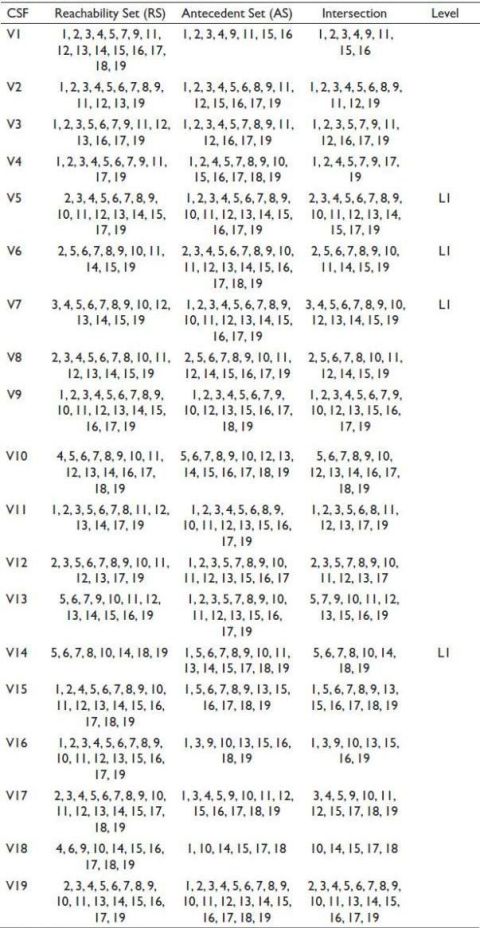
Note: CSF: Critical success factor.
Table 6. Level Partition: Iteration 2.
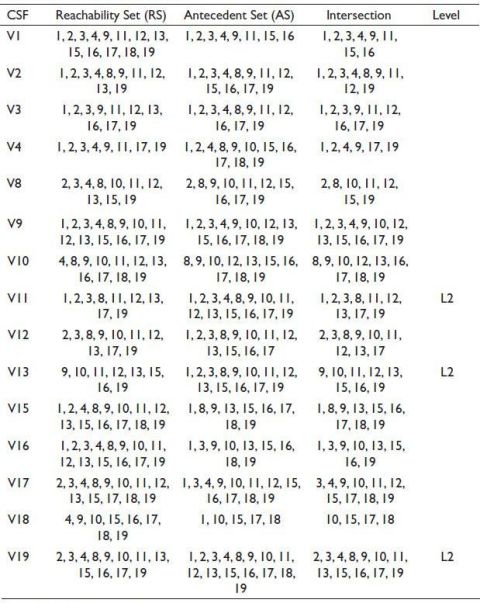
Note: CSF: Critical success factor.
Table 7. Level Partition: Iteration 3.

Note: CSF: Critical success factor.
Table 8. Level Partition: Iteration 4.
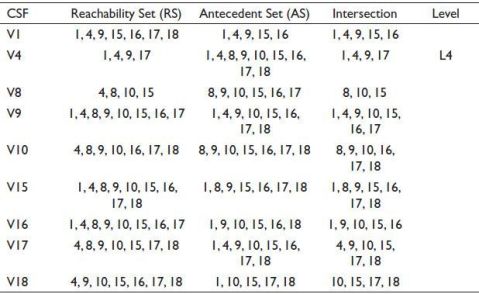
Note: CSF: Critical success factor.
Table 9. Level Partition: Iteration 5.

Note: CSF: Critical success factor.
Table 10. Level Partition: Iteration 6.

Note: CSF: Critical success factor.
Table 11. Level Partition: Iteration 7.

Note: CSF: Critical success factor.
Table 12. Level Partition: Iteration 8.

Note: CSF: Critical success factor.
Table 13. Level Partition: Iteration 9.

Note: CSF: Critical success factor.
Formation of Interpretive Structural Modelling-based Model
From the final reachability matrix, the structural model is generated. If the relationship exists between the CSFs j and i, an arrow pointing from i to j shows this. This resulting graph is called a digraph. Removing the transitivities as described in the ISM methodology, the digraph is finally converted into the ISM model. The ISM-based model is shown in Figure 1.
Graphical Representation of Driving and Dependence Power of Each Critical Success Factor
In order to classify CSFs, the driving and dependence power of these factors have been derived from the final reachability matrix. The driving and dependence power of each CSF are then represented graphically using the MICMAC analysis. The y-axis in the graph represents the driving power of the CSFs, whereas the x-axis in the graph represents the dependence power of the CSFs. The graph has been divided into four clusters, namely A, B, C and D. The factors in the first Cluster A represent autonomous factors. Any factor, if present in Cluster A, indicates that it is not linked to other factors and is more or less independent in the system. Factors in the second Cluster B are influenced by other factors and do not influence other factors. Thus, such factors are known as dependent factors. Factors in Cluster C are known as linkage factors. These factors act as a connecting link among factors in the system. Factors in Cluster D are known as independent factors, as they drive other factors and are not influenced by other factors in the system. The MICMAC analysis is shown in Figure 2.
A detailed study followed by the development of the ISM for the scale-up of 1M1B into the following four clusters.
Independent variables: (V1), (V16) and V18. These have a very strong driving power but an extremely weak dependence on other variables under study.
Linkage variables: Most variables are placed under the Linkage Cluster. They are V2, V3, V4, V5, V6, V7, V8, V9, V10, V11, V12, V13, V15, V17, V19. These variables have very high driving power and very high dependency, and they need to be studied more carefully. Any action on these enablers is expected to have an impact on the others and have a reciprocal effect on them.
Figure 1. Interpretive Structural Modelling (ISM)-based Model of Critical Success Factors (CSFs) for Scale-up of One Million for One Billion (1M1B).
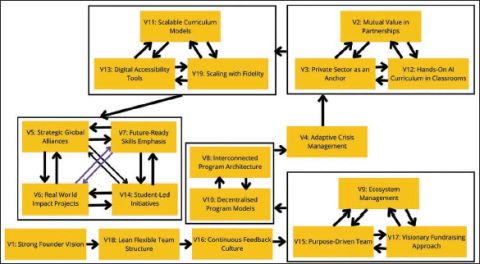
Figure 2. Cross-impact Matrix Multiplication Applied to Classification (MICMAC) Analysis of Critical Success Factors (CSFs) for Scale-up of One Million for One Billion (1M1B).

Dependence variables: Only one variable, V14, is placed under the Dependence Cluster, indicating its high level of dependency but a lack of driving power.
Autonomous variables: No variable falls into this cluster, which indicates relatively less significance as variables here lack both driver power and dependence power.
Conclusion and Future Policy Implications
Summary of Key Findings
This study has developed an empirically-grounded TISM-based framework of 19 CSFs for scaling a social enterprise, derived from and validated through the operational experience of 1M1B Foundation. The framework reveals a hierarchically structured, tightly integrated causal system in which three independent (driver) factors, that is, Strong Founder Vision, Continuous Feedback Culture and Lean Flexible Team Structure, form the foundational base from which 15 interconnected linkage factors and one dependent outcome factor (student-led initiatives) emerge. MICMAC analysis confirms that the scaling system contains no autonomous variables, underscoring the systemic interdependence of all identified CSFs.
The ISM model positions founder vision as the deepest structural foundation of the entire scaling architecture at Level 9, with operational culture and team flexibility at Levels 8 and 7, ecosystem and partnership management at Levels 5–6, programme architecture and curriculum at Levels 3–5, and programme-facing outcomes, global alliances, real-world impact and fidelity of scaling at Levels 1–2. This hierarchy has direct decision-making implications: social enterprise leaders seeking to scale impact should prioritise foundational factors first, recognising that programme-level outcomes are emergent properties of a well-functioning system rather than independent targets to be pursued directly.
Theoretical Contributions
This study contributes to the social entrepreneurship literature in three distinct ways. First, it extends the empirical base of CSF research in social enterprises to the Indian digital skilling context, a domain of growing practical importance but limited academic documentation. Second, it demonstrates the utility of TISM methodology for social entrepreneurship research, generating not merely a list of factors but a causally ordered structural model that captures the mechanisms and hierarchies underlying successful scale-up. Third, it challenges linear, additive conceptions of social enterprise scaling by revealing a highly interconnected system in which interventions on any one factor produce ripple effects throughout the system; a finding that underscores the inadequacy of single-factor explanations of social enterprise success or failure.
The theoretical positioning of student-led initiatives as a dependent rather than a driver variable is particularly noteworthy. Much of the practitioner literature on youth-led development treats youth participation as a primary mechanism of social change. The structural analysis presented here suggests a more nuanced relationship: student initiative is best understood as an emergent outcome of a healthy scaling ecosystem, not an independent input that can substitute for foundational organisational capabilities. This finding has implications for programme design, evaluation and theory-building in youth development contexts more broadly.
Policy Implications
The findings carry several concrete implications for policymakers, funders and social enterprise practitioners operating in India and comparable developing country contexts.
For government policymakers, the 2019 crisis underscores the risks of making social enterprises structurally dependent on a single tier of government funding exposed to political cycles. Policy frameworks that mandate multi-year, outcome-linked funding agreements, potentially co-financed by private sector CSR and development finance, would substantially reduce the vulnerability that nearly ended 1M1B’s operations. India’s Companies Act 2013 CSR framework, while well-intentioned, tends to favour annual tranches over the multi-year programme commitments that enable genuine scale. Legislative or regulatory amendments encouraging longer-horizon CSR commitments, particularly for education and skilling initiatives demonstrating verifiable impact, could significantly improve the survival and scaling prospects of mission-driven organisations.
The embedding of 1M1B’s AI curriculum within CBSE’s SEWA framework offers a policy template for mainstreaming future-skills education at scale without requiring parallel infrastructure investment. Ministries of Education across developing economies might consider establishing formal ‘embedding agreements’ with accredited social enterprises, granting curriculum integration rights in exchange for rigorous impact reporting and quality standards compliance. Such agreements would align with the SDG 4 (Quality Education) and SDG 8 (Decent Work and Economic Growth) agendas while leveraging existing institutional infrastructure.
For philanthropic and impact investors, the MICMAC classification provides a strategic prioritisation tool. Funding directed at independent variables, particularly leadership development, team capacity and organisational learning systems, is likely to generate the highest systemic returns, as these factors drive the entire scaling architecture. Conversely, programme-specific funding (e.g., a single digital literacy workshop) that does not address foundational factors is unlikely to produce sustained impact. Funders might usefully require grantees to map their CSF ecosystems as a condition of multi-year support, ensuring that investments address systemic drivers rather than symptomatic outputs.
For social enterprise practitioners, the ISM hierarchy offers a practical decision-sequencing framework. Before investing in programme expansion, geographic replication or high-visibility partnerships, leaders should honestly assess whether their foundational independent factors, such as founder vision clarity, continuous feedback infrastructure and lean team culture, are genuinely in place. The 1M1B experience suggests that attempting to scale programme-level factors before establishing organisational foundations leads to fragility, as the 2019 crisis demonstrated. Conversely, organisations that invest deeply in culture, feedback systems and mission-aligned human capital first may scale more slowly initially but achieve more durable outcomes.
Limitations and Future Research Directions
Several limitations of this study warrant acknowledgement. First, the CSF identification and TISM modelling are based primarily on expert opinion from a relatively small panel with close proximity to the 1M1B Foundation, introducing potential confirmation bias. While the iterative validation process mitigated this risk, the framework requires empirical testing across a larger and more diverse set of social enterprises before generalisability can be claimed. Second, TISM is inherently a static modelling technique that captures relationships at a point in time; as 1M1B’s operational context evolves, particularly with international expansion into Singapore, the USA and Dubai, the causal architecture may shift in ways not captured by the current model.
Third, this study does not directly measure beneficiary outcomes, relying instead on organisational metrics (numbers of students reached, schools onboarded, teachers trained) as proxies for impact. Future research employing quasi-experimental or longitudinal methods to assess learning outcomes, economic trajectories, and civic engagement of 1M1B programme alumni would substantially strengthen the evidence base for the CSF framework advanced here.
Future research might productively extend this work in four directions. First, comparative TISM studies across multiple Indian social enterprises (in both digital education and other domains) would enable the identification of common structural patterns and context-specific variations in CSF hierarchies. Second, longitudinal tracking of 1M1B’s scaling trajectory as the organisation enters new international markets would test the transferability of the framework derived from its Indian operational context. Third, quantitative validation of the CSF framework through structural equation modelling on a larger sample of social enterprises would strengthen the generalisability and predictive validity of the findings. Fourth, participatory research with programme beneficiaries, particularly the student alumni who have progressed through the 1M1B system, would provide a demand-side complement to the supply-side, organisational perspective that dominates the current analysis.
As a UN-accredited organisation delivering AI and digital-skilling programmes to over 500,000 students, 1M1B Foundation stands at an inflection point between national-scale impact and global ambition. The framework developed in this study equips its leadership, funders and partners with a structured map of the causal architecture that has enabled its growth, and a strategic roadmap for navigating the challenges that lie ahead. The founder’s guiding principle (‘your network is your net worth’) captures, in essence, the systemic insight that social impact at scale is never the product of a single variable, but always the emergent property of relationships, trust and organisational capacity compounded over time.
Declaration of Conflicting Interests
The authors declared no potential conflicts of interest with respect to the research, authorship and/or publication of this article.
Funding
The authors received no financial support for the research, authorship and/or publication of this article.
ORCID iDs
Omera Yusuf https://orcid.org/0009-0005-5868-8543
Ekanto Ghosh https://orcid.org/0009-0002-3782-7717
Aditya Birla Group. (2024). Empowering the next generation: Corporate-led micro-internships and future skills development in partnership with 1M1B. Aditya Birla Corporate Social Responsibility Annual Review.
Adobe India. (2024). Creativity for all: Adobe and 1M1B Foundation empower 30,000 educators and students with digital storytelling tools. Adobe Press Room India.
Advaita, R., Sarin, A., & Mathur, N. (2017). Wicked problems in public policy: From theory to practice. 3rd International Conference on Public Policy (ICPP3). https://www.ippapublicpolicy.org/file/paper/59426605f16ac.pdf
AICTE. (2024). AICTE joins forces with 1M1B Green Skills Academy to launch 100,000 green internships for technical students in India. All India Council for Technical Education Press Release Archive.
Austin, J., Stevenson, H., & Wei-Skillern, J. (2006). Social and commercial entrepreneurship: Same, different, or both? Entrepreneurship Theory and Practice, 30(1), 1–22.
Bloom, P. N., & Smith, B. R. (2010). Identifying the drivers of social entrepreneurial impact: Theoretical development. Entrepreneurship Theory and Practice, 34(5), 925–945.
Bradach, J. (2003). Going to scale: The challenge of replicating social programs. Stanford Social Innovation Review, 1(1), 19–25.
Business Standard. (2015). Naidu unveils ‘smart village’ plan. Business Standard Economy & Policy News. https://www.business-standard.com/article/economy-policy/naidu-unveils-smart-village-plan-115010100948_1.html
David, S. (2020). The kids are ‘Artificial Intelligence’ right. The New Indian Express. https://www.newindianexpress.com/lifestyle/tech/2020/Jan/23/the-kids-are-artificial-intelligence-right-2093306.html
Dees, J. G. (1998). The meaning of social entrepreneurship (Working Paper). Kauffman Foundation.
Dees, J. G., Anderson, B. B., & Wei-Skillern, J. (2004). Scaling social impact: Strategies for spreading social innovations. Stanford Social Innovation Review, 2(1), 24–32.
Entrackr. (2018). How 1M1B aims to create jobs for billion Indians by enabling 1 million startups. Entrackr Media. https://entrackr.com/2018/06/1m1b-plans-empower-1-billion-population/
GGSIPU. (2025). Netted Bytes: University School of Automation & Robotics (USAR) Newsletter (3rd ed.). Guru Gobind Singh Indraprastha University East Delhi Campus.
Great Place to Work India. (2024). 1M1B Foundation: Workplace culture assessment and certified profile summary. Great Place to Work Institute Certification Index.
IBM. (2020). CBSE collaborates with IBM to integrate AI curriculum in 200 schools across India. IBM India/South Asia Newsroom. https://in.newsroom.ibm.com/2020-07-16-CBSE-IBM-AI-Curriculum
ICFAI. (2025). Mainstreaming climate leadership: ICFAI Group signs comprehensive MoU with 1M1B Foundation across 10+ campuses. ICFAI University Media Relations.
India Education Diary. (2024). 1M1B collaborates with Salesforce to set up the 1st physical centre of 1M1B Green Skills Academy in Hyderabad. India Education Diary Bureau. https://indiaeducationdiary.in/1m1b-collaborates-with-salesforce-to-set-up-the-1st-physical-centre-of-1m1b-green-skills-academy-in-hyderabad/
India Education Diary. (2025). 1M1B Impact Summit at UN Geneva to spotlight India’s youth-led AI and sustainability solutions. India Education Diary Bureau. https://indiaeducationdiary.in/1m1b-impact-summit-at-un-geneva-to-spotlight-indias-youth-led-ai-and-sustainability-solutions/
India Today. (2025). How Manav Subodh’s 1M1B is turning young Indians into global climate leaders. India Today Education Feature. https://www.indiatoday.in/education-today/how-i-made-it/story/how-manav-subodhs-1m1b-is-turning-young-indians-into-global-climate-leaders-2804833-2025-10-18
IRCAI. (2021). Creators not consumers: A 1M1B youth skills program. International Research Centre on Artificial Intelligence under the auspices of UNESCO. Top 100 Project Registry. https://ircai.org/top100/entry/creators-not-consumers/
Jena, J., Fulzele, V., Gupta, R., Sherwani, F., Shankar, R., & Sidharth, S. (2016). A TISM modelling of critical success factors of smartphone manufacturing ecosystem in India. Journal of Advances in Management Research, 13(2), 203–224.
Joshi, M. (2024). Personal interview [Conducted by the author, November 2024]. Youth Advisory Member and Youth Lead for AI and Innovation, 1M1B Foundation.
Mair, J., & Martí, I. (2006). Social entrepreneurship research: A source of explanation, prediction, and delight. Journal of World Business, 41(1), 36–44.
Mersland, R., & Strøm, R. Ø. (2009). Performance and governance in microfinance institutions. Journal of Banking and Finance, 33(4), 662–669.
Meta India. (2025). Fostering the open-source AI ecosystem: Meta collaborates with Indian social enterprises to upskill collegiate developers. Meta Newsroom India.
Mohan, S. (2018). What it takes to scale a social enterprise in India. YourStory. https://yourstory.com/2018/12/social-enterprise-scaling-villgro
Nationwide Awards. (2021). Saffin Mathew: Social entrepreneurship and NGO sector honors profile. Excellence in Youth Mobilization & SDG Alignment.
NextBillion. (2018). This social entrepreneur is creating employment in underserved areas. NextBillion News Archive. https://nextbillion.net/news/social-entrepreneur-creating-employment-underserved-areas/
Nyssens, M. (Ed.). (2006). Social enterprise: At the crossroads of market, public policies and civil society. Routledge.
PIB Delhi. (2022). National Education Society for Tribal Students (NESTS) and 1M1B Foundation signed MoU to train teachers and students of EMRSs in AR-VR skills. Press Information Bureau, Ministry of Tribal Affairs, Government of India. https://www.pib.gov.in/PressReleasePage.aspx?PRID=1876972
Rao, B. G. (2024). Manav Subodh profile: Social entrepreneur and University of California, Berkeley Senior Fellow (2015–18). Bindu Gopal Rao Freelance Portfolios. https://www.bindugopalrao.com/manav-subodh/
Rockart, J. F. (1979). Chief executives define their own data needs. Harvard Business Review, 57(2), 81–93.
Salesforce India. (2025). Equipping the future workforce: Salesforce and 1M1B commit to skilling 1 million youth in AI and sustainability by 2030. Salesforce Newsroom India.
Subodh, M. (2013). How to activate ideas. TED Institute. https://www.youtube.com/watch?v=3RfKe3C4sRw
Subodh, M. (2024a). The use of AI in classrooms. Deccan Herald. https://www.deccanherald.com/education/the-use-of-ai-in-classrooms-2840258
Subodh, M. (2024b). Personal interview [Conducted by the authors, November 2024]. Founder, 1M1B Foundation.
Sushil. (2005). Interpretive matrix: A tool to aid interpretation of management and social research. Global Journal of Flexible Systems Management, 6(2), 27–30.
Sustainability Karma. (2024). AI and climate solutions to propel global sustainability goals: 8th annual 1M1B Activate Impact Summit. Sustainability Karma News. https://sustainabilitykarma.com/news/ai-and-climate-solutions-to-propel-global-sustainability-goals/
Talib, F., Rahman, Z., & Qureshi, M. N. (2011). Analysis of interaction among the barriers to total quality management implementation using interpretive structural modeling approach. Benchmarking: An International Journal, 18(4), 563–587.
The Hindu. (2024). 1M1B Foundation to set up Green Skills Academy in Hyderabad. The Hindu Business & Education. https://www.thehindu.com/news/cities/Hyderabad/1m1b-foundation-to-set-up-green-skills-academy-in-hyderabad/article68300273.ece
The New Indian Express. (2024). 1.5 Matters launched in Hyderabad to mitigate global warming. https://www.newindianexpress.com/cities/hyderabad/2024/Dec/07/15-matters-launched-in-hyderabad-to-mitigate-global-warming
UN, ECOSOC. (2019). List of non-governmental organizations in consultative status with the Economic and Social Council. United Nations Civil Society Participation Database. Registry Code: 662829. https://esango.un.org/civilsociety/
UN Youth Office. (2025). #YouthLead Festival official program and partner side events calendar. United Nations Youth Office Records.
Warfield, J. N. (1974). Developing interconnection matrices in structural modeling. IEEE Transactions on Systems, Man and Cybernetics, 4(1), 81–87.
Warrier, S. (2025). Manav Subodh: ‘Create million to impact billion lives’. Rediff.com Realtime News/GetAhead Interview. https://m.rediff.com/getahead/interview/manav-subodh-create-million-to-impact-billion-lives/20250117.htm
Yunus, M., Moingeon, B., & Lehmann-Ortega, L. (2010). Building social business models: Lessons from the Grameen experience. Long Range Planning, 43(2–3), 308–325.
Zahra, S. A., Gedajlovic, E., Neubaum, D. O., & Shulman, J. M. (2009). A typology of social entrepreneurs: Motives, search processes and ethical challenges. Journal of Business Venturing, 24(5), 519–532.
Exhibit 1. Evolution of the One Million for One Billion (1M1B) Vision (Flowchart).

Exhibit 2. ‘Sustainability Accelerator Programme for Climate Change Action Announced’ (Newspaper Feature).

Exhibit 3. ‘The Kids are Artificial Intelligence (AI) Right’ (Newspaper Feature).

