
IIFT International Business and Management Review Journal

Priyanka Aggarwal1 , Manaswi Kumar2 and Arushi Bathla3
1School of Law, Maharaja Agrasen Institute of Management Studies, New Delhi, Delhi, India
2School of Management, Bennett University, Greater Noida, Uttar Pradesh, India
3School of Liberal Arts, O P Jindal Global University, Sonipat, Haryana, India

Creative Commons Non Commercial CC BY-NC: This article is distributed under the terms of the Creative Commons Attribution-NonCommercial 4.0 License (http://www.creativecommons.org/licenses/by-nc/4.0/) which permits non-Commercial use, reproduction and distribution of the work without further permission provided the original work is attributed.
Sustainable finance is increasingly posited as a crucial lever to drive the Sustainable Development Goals (SDGs), yet evidence of its causal development impacts is disjointed and heavily skewed towards developed countries. This review synthesises extant research to clarify how, where and through which mechanisms sustainable finance contributes to SDG outcomes. The article presents a systematic literature review of 77 peer-reviewed articles published between 2015 and 2025, considered from the point of view of the Theory–Context–Characteristics–Methodology (TCCM) framework. The review integrates theoretical mapping, empirical pattern identification and methodological assessment to derive an integrative explanatory framework. The literature is dominated by stakeholder, institutional and legitimacy theories, indicating theoretical pluralism but limited causal integration. Empirical evidence is heavily skewed towards environmental SDGs (7, 11, 12, 13, 15) and economic growth outcomes (8, 9, 17), while social SDGs (1, 3, 4, 5, 10, 16) remain significantly underexamined. Methodologically, panel-data econometrics and systematic reviews prevail, strengthening causal inference for environmental and financial outcomes but offering limited insight into social development pathways. Geographic concentration in developed economies persists despite larger SDG financing gaps in developing regions. Synthesising these findings, the study proposes a Strategy Tripod Framework, positioning SDG impact at the intersection of institutional design, resource mobilisation and cultural legitimacy, mediated by innovation adoption, financing capability and organisational credibility. This review advances the literature by offering an integrated causal framework explaining uneven SDG outcomes of sustainable finance and highlighting critical gaps in social SDG financing, legitimacy mechanisms and developing-economy contexts. It underscores that sustainable finance is necessary but insufficient for SDG achievement without complementary institutional strengthening and equitable capital reallocation.
Sustainable finance, SDGs, ESG, green finance, TCCM framework, Strategy Tripod, systematic literature review
Introduction
The Sustainable Development Goals (SDGs) are a universal call to action to end poverty, protect the planet and ensure that all people enjoy peace and prosperity by 2030. This requires a seismic shift in the direction that capital flows, towards projects with clear environmental, social and governance (ESG) benefits. Sustainable finance, or the conscious use of financial flows to serve ESG considerations, has emerged as a vital lever for this reorientation: a ‘master key’ that is being used to unlock SDG progress in countless economic, social and environmental contexts. This story is consistent across multiple scales of analysis. Cross-nationally, in the European Union (EU) and Baltic Sea region, sustainable financial models are linked to better SDG performance on social goals (SDGs 1, 3–5, 10–16), environmental targets (11, 12, 13, 15) and economic objectives (8, 9, 17) (Streimkiene et al., 2023; Zio.png) o et al., 2020). Evidence from the international context is consistent with green finance having a positive impact on sustainable development, but the effects depend on context and time (Wang et al., 2022).
o et al., 2020). Evidence from the international context is consistent with green finance having a positive impact on sustainable development, but the effects depend on context and time (Wang et al., 2022).
For the cases of specific economies like Indonesia, Pakistan, BRI/CPEC, India and E7 countries, it is evidenced how green finance promotes sustainability through the use of green technology for investment in infrastructure and support to micro-enterprises and its benefits towards achieving SDGs 3, 7, 8, 11–13 (Al-Rawashdeh et al., 2025; Chaudhry & Hussain, 2023; Dhani et al., 2025; Mahmood et al., 2024; Ronaldo & Suryanto, 2022). Bottom-up surveys show that sustainable finance does better than traditional finance in driving results such as poverty reduction, food security and environmental protection.
However, there are several bottlenecks to scaling sustainable finance globally. Regulation gaps, weak institutions and high transaction costs, as well as the absence of data transparency conducive the adoption rates, especially in developing countries where SDG financing can be most intense (Khettabet et al., 2025). This disparity between proven efficacy and restricted availability provides the rationale for a systematic overview of existing evidence. The systematic literature review, in this article, aims to structure empirical evidence related to the role played by sustainable finance in advancing the SDGs and to recognise structural factors that act as constraints to its propagation.
Using the PRISMA protocol, the Theory–Context–Characteristics–Methodology (TCCM) framework and Strategy Tripod synthesis, the review addresses the following objectives:
The findings aim to inform evidence-based policy design in this increasingly urgent domain.
Methodology
This study employs a three-phase systematic methodology: the PRISMA protocol for transparent article selection; the TCCM framework for structured content analysis; and an integrated Strategy Tripod framework for conceptual synthesis.
PRISMA
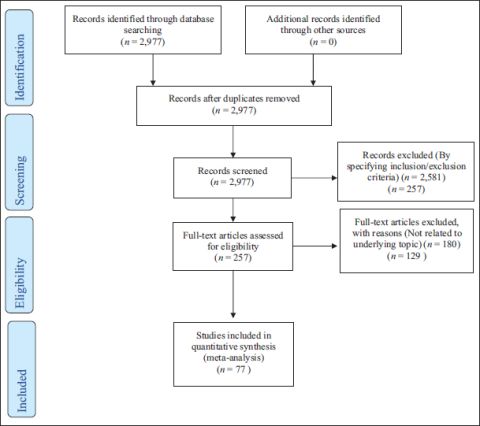
We conducted a full search in the Web of Science (WoS) database, which is recognised as a top source for peer-reviewed material on business, economics and environmental management. A comprehensive search was implemented, comprising 17 key terms related to the sustainable finance ecosystem: ‘sustainable finance’, ‘green bonds’, ‘green financing’, ‘green financial assets’, ‘green investment’, ‘sustainable financing’, ‘green funds’, ‘green bank’, ‘green sovereign bonds’, ‘green sukuk’, ‘climate finance’, ‘green climate fund’, ‘green loans’, ‘sustainable Investment’, ‘climate awareness bond’, ‘esg financing’ and ‘environmental financing’. This study was carried out in the WoS database between 2015 and 2025. It was limited to English serials in Law, Economics, Business Finance and Management. Only publications in peer-reviewed journals were included; books, conference proceedings and white papers were excluded. Initially, 2,977 records were produced. The detailed study selection process following PRISMA 2020 guidelines is illustrated in Figure 1.
To allow objective and reproducible selection of studies, we were compliant with the PRISMA 2020 statement. The multi-stage screening was organised. First, two reviewers screened the titles and abstracts according to the inclusion/exclusion criteria; climate finance, green financial instruments, sustainable finance and ESG integration publications were included. The next stage included a review of the full manuscripts based on the following set of inclusion–exclusion criteria: (a) comprehensibility of explanation for sustainable finance framework (ESG, green bonds, climate finance, sustainable investing and so on); (b) manuscript’s rigour in testing financial performance, environmental outcome, risk or governance quality; (c) contribution to the literature—sustainable finance-related analysis empirically- or theoretically-speaking; and (d) methodological soundness expressed in format of presentation. We have excluded the articles that do not meet these requirements (opinion, book reviews, duplicate publications, versus circumstances non-peer-reviewed publications; published in languages other than English; less than 50% of content related to sustainable finance). Seventy-seven peer-reviewed articles that met all inclusion criteria were chosen for inclusion into the data set after a full-text assessment.
Figure 1. Methodology for Data Collection Following PRISMA Guidelines.
TCCM Framework
The TCCM framework provides a systematic structure for extracting, organising and synthesising evidence from heterogeneous research streams. This framework was selected because sustainable finance is an interdisciplinary field drawing on multiple theoretical traditions spanning diverse geographic and sectoral contexts with varied operationalisations of key constructs.
Strategy Tripod Framework
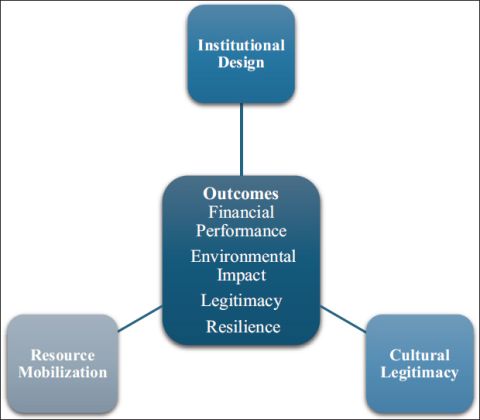
Building on TCCM outputs, we developed an integrated Strategy Tripod Framework. The framework positions sustainable finance outcomes (financial performance, environmental impact, risk resilience, legitimacy, real-world impact) at the apex of three mutually dependent pillars: institutional design, resource mobilisation and industry characteristics.
Findings
The review examined 77 articles throughout all four domains of the TCCM framework to ascertain how sustainable finance could facilitate the attainment of the SDGs. Table 1 indicates that the predominant theories were associated with stakeholders, institutions and legitimacy, comprising 24.7% of the total. Sustainable development and climate transition frameworks constituted 20.8%, the second-largest cluster, while risk-return portfolio approaches accounted for 19.5%. This distribution is significant: the 20.8% proportion of frameworks concentrating on the SDGs (Aggarwal et al., 2025; Ali et al., 2024; Chaudhry et al., 2023; Fligstein & Huang, 2025; Fu et al., 2023; Habib et al., 2025; Joshipura et al., 2024, 2025; Kumar et al., 2022, 2023; Li, 2025; Meng & Shaikh, 2023; Reza et al., 2025; Teixeira, 2025) demonstrates a comprehensive comprehension of sustainable finance as a mechanism to fulfil the following SDGs: eradicating poverty (SDG 1), attaining clean energy (SDG 7), ensuring decent work and economic growth (SDG 8), advancing industrial innovation (SDG 9), developing sustainable urban environments (SDG 11), encouraging responsible consumption (SDG 12), addressing climate change (SDG 13) and safeguarding terrestrial ecosystems (SDG 15).
Table 1. Theoretical Frameworks.
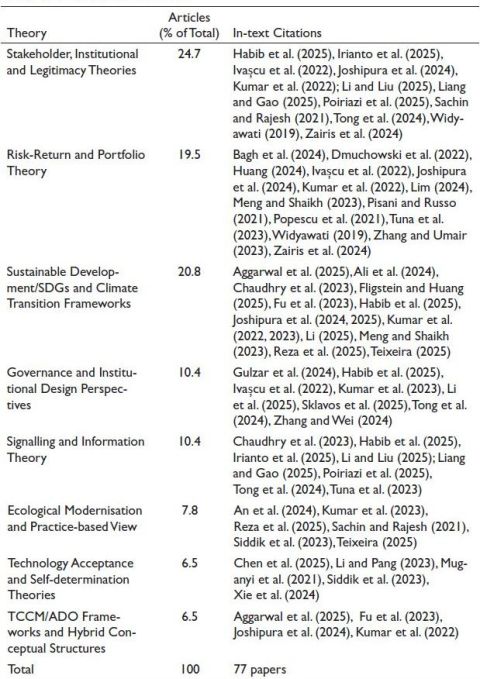
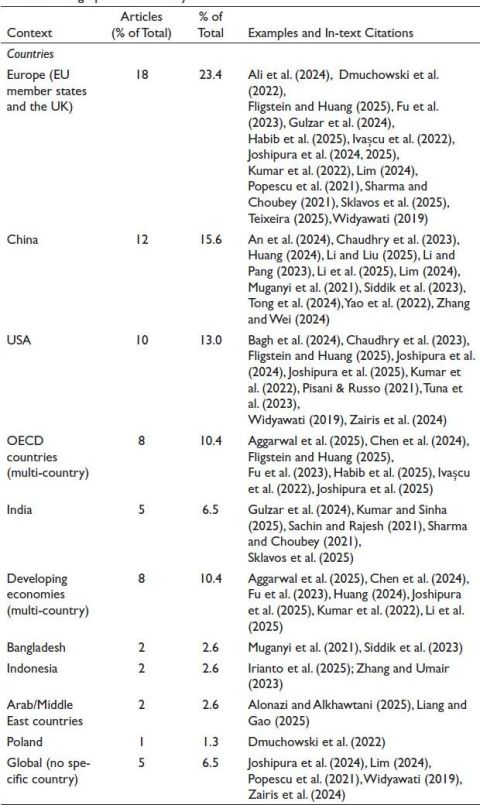
A large number of stakeholder and institutional theories reveal that sustainable finance facilitates these development goals via legitimacy, stakeholder alignment and governance. Among the regions studied, 23.4% were in Europe, 15.6% in China and 13.0% in the USA. According to Table 2, the banking and financial services sector accounted for 18.2%, asset management for 14.3% and green finance for 10.4% of the institutional contexts.
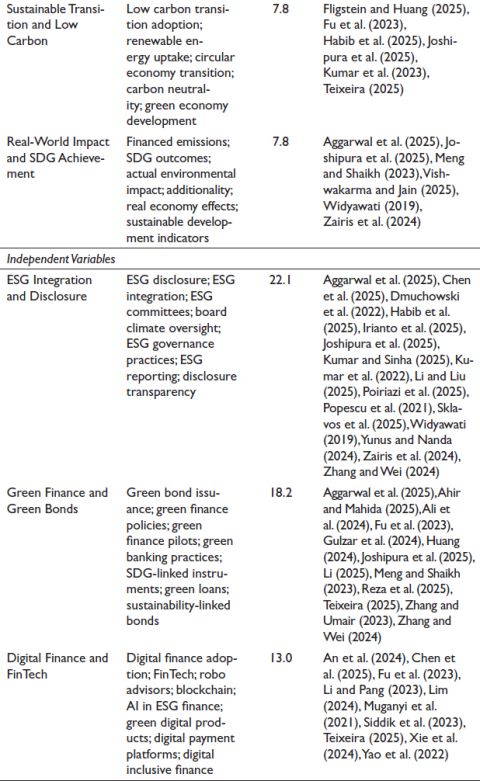
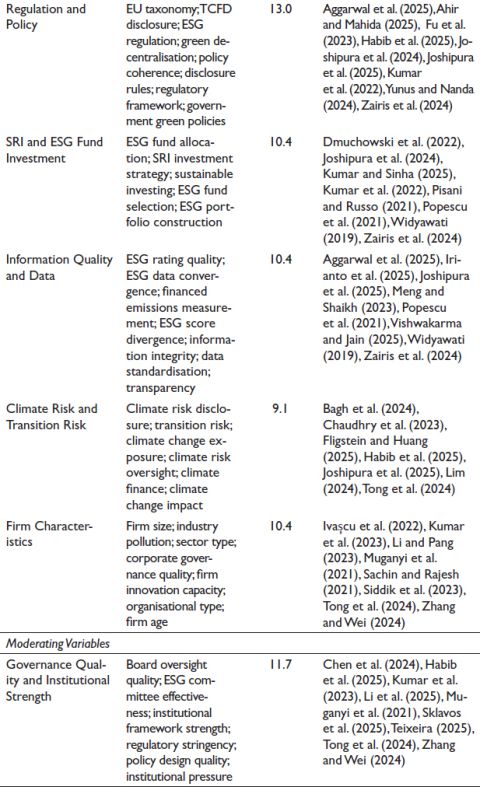
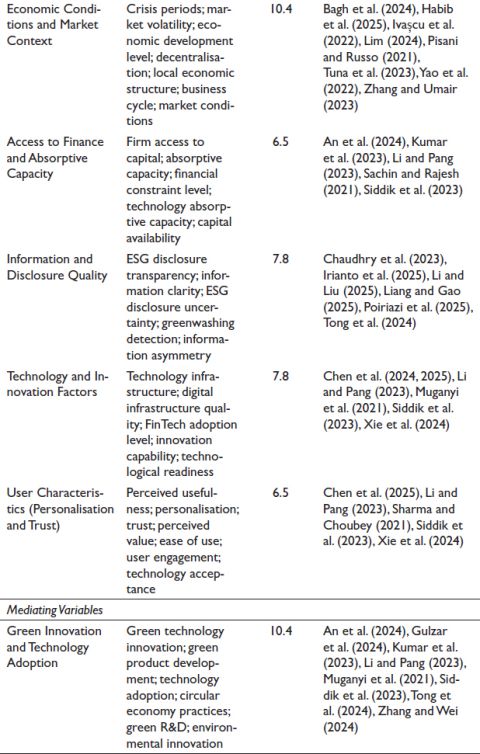
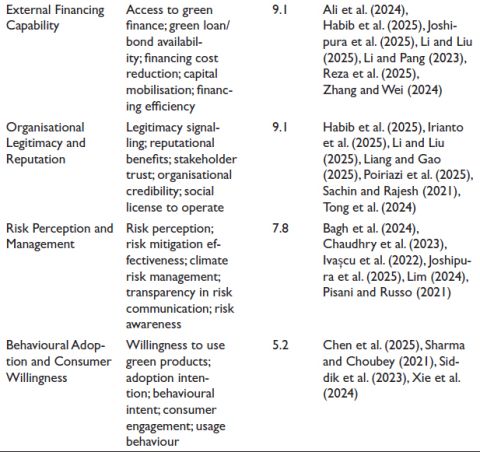
When it comes to dependent variables, there is a large body of knowledge, yet measuring priorities is fragmented (Table 3). Indicators of financial success (16.9%), environmental results (15.6%) and ESG performance evaluations (14.3%) were the subjects of the study. According to Table 3, the main independent determinants were green finance mechanisms (18.2%) and ESG integration and transparency (22.1%). The significant moderators were governance quality (11.7%) and economic conditions (10.4%).
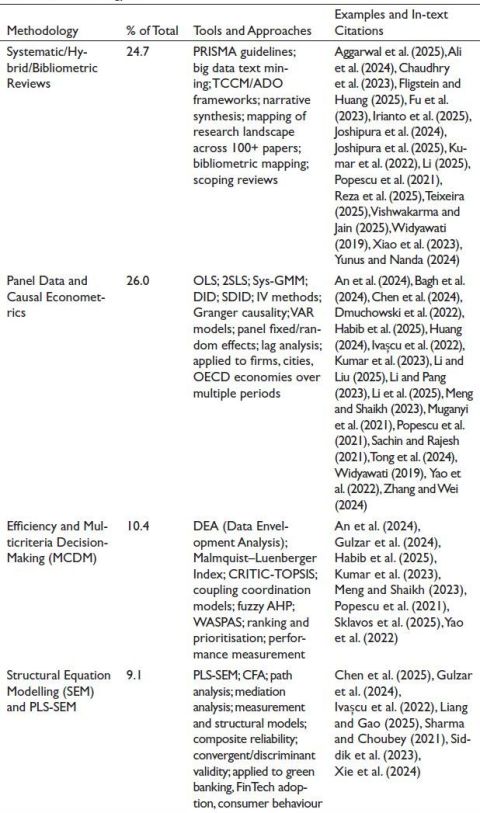
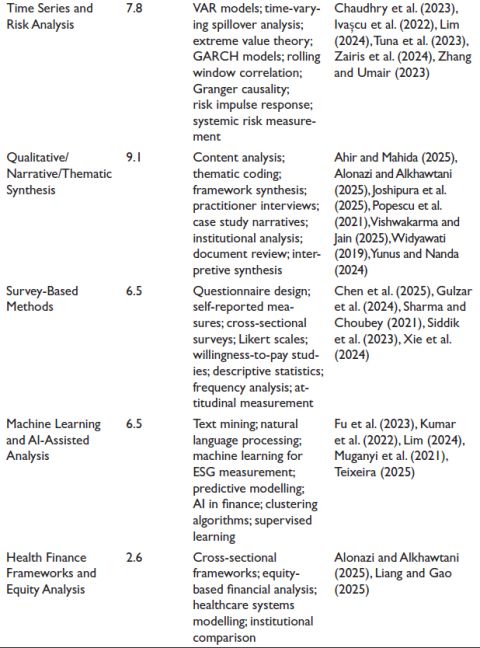
Methodologically, panel data and causal econometrics (26.0%) and systematic reviews (24.7%) competed for the limelight, shaping a field interested in longitudinal causal inference and evidence synthesis rather than purely predictive or experimental designs (Table 4). Taken together, these patterns depict sustainable finance research as theoretically pluralistic but geographically concentrated in developed markets, orientated towards the study of formal governance mechanisms and increasingly self-assured in terms of methods for causal inference.
Table 2. Geographic and Industry Context.
.jpg/10_1177_jiift_261426706-table3(1)__480x765.jpg)
Table 3. Study Characteristics—Variables.
.jpg/10_1177_jiift_261426706-table4(1)__480x792.jpg)
Future Research Directions
The study reveals significant gaps in sustainable finance literature relative to SDG achievement, pointing towards critical priorities for future work.
SDG Coverage and Real-World Impact
From an analytical point of view, although research that examines the role of sustainable finance focuses on SDGs 7–8, 11–13 and 15, the social ones (1, 3, 4–5, 10, 16) have not been fully explored in light of social sustainable investments. Further study is needed to determine how sustainable finance contributes directly to poverty reduction (SDG 1), health and well-being (SDG 3), quality education (SDG 4), gender equality (SDG 5) and reduced inequality (SDG 10).
Table 4. Methodology.
Critical gaps also exist in measuring additionality and counterfactual impact: do sustainable finance flows genuinely shift capital towards SDG projects, or merely relabel existing investments? Longitudinal studies tracking financed emissions reductions and real-economy employment gains across developing economies are essential.
Developing Economy Context
The geographic concentration in Europe, China and North America masks the SDG financing crisis in least developed countries and Sub-Saharan Africa. Future research must shift focus to regions where SDG financing gaps are largest but sustainable finance infrastructure is weakest. This requires context-specific studies of how regulatory, institutional and informational barriers in developing economies constrain sustainable finance adoption and SDG progress, alongside innovation in locally-adapted instruments (community bonds, mobile-based green microfinance, South–South climate finance).
Causal Mechanisms and Institutional Design
While 26% of studies employ causal econometrics, few examine the conditional mechanisms through which sustainable finance advances specific SDGs. Future work should use process-tracing, institutional ethnography and mixed-methods designs to understand how ESG disclosure, green finance policies and digital platforms operate differently across governance contexts and SDG domains. How does board oversight quality, regulatory stringency or local political economy shape the relationship between sustainable finance and SDG outcomes?
Greenwashing and SDG Credibility
The 9.1% of studies addressing greenwashing reflects insufficient attention to a critical threat to sustainable finance’s SDG legitimacy. Future research must develop robust methods for detecting greenwashing at scale (machine learning-enhanced ESG audits, satellite-based environmental verification), examine systemic incentives enabling greenwashing, and measure the reputational and developmental costs of false SDG claims. How does greenwashing undermine stakeholder trust and distort capital allocation away from genuine SDG progress?
Social SDG Mechanisms
Studies of how sustainable finance contributes to social development (health, education, equality, peace) are patchy and undertheorised. Future research should investigate the financing and governance characteristics of impact investors, development banks and social enterprises active in SDGs 1, 3–5, 10, 16. How do finance for women, bonds linked to education and investments in building peace all contribute to these goals? In what ways do metrics and accountability systems for social SDGs diverge from those related to the environment?
Technology, Innovation and SDG Scalability
Just 6.5% of studies concern the use of machine learning and AI-assisted analysis, while 13% focus on FinTech; few connect digital innovation to scalability for SDGs. Future research should examine big data, AI and blockchain, but also robo-advisory platforms and digital payment systems bring about transaction cost reduction RI to other areas of social impact investing in LDCs, paving the way for them to access sustainable finance more effectively and driving further progress SDGM. Challenges and opportunities of automation in assessing SDG additionality. What are the risks and opportunities regarding automation when it comes to evaluating the SDG additionality?
Integration and Interdependence
Current research treats SDGs as discrete silos; future work must examine how sustainable finance simultaneously advances multiple SDGs and manages trade-offs. How do climate finance investments (SDG 13) interact with food security (SDG 2), water (SDG 6) and biodiversity (SDG 15)? What governance frameworks manage these interdependencies? How do sectoral approaches (green banking for SDGs 7–9, inclusive finance for SDG 1, gender-linked finance for SDG 5) need to be integrated for holistic SDG achievement?
Policy Coherence and SDG Financing Architecture
Future research should move beyond individual instruments towards systems-level analysis of how sustainable finance policies, regulations (EU taxonomy, TCFD, national green standards) and institutional arrangements create or obstruct coherent SDG financing ecosystems. How do competing regulatory frameworks fragment capital flows? What policy reforms would align sustainable finance incentives with SDG priorities in developing economies?
Conceptual Framework
In this section, the authors have proposed a Strategy Tripod Framework, which integrates three pillars linking sustainable finance to SDG outcomes (Figure 2). Institutional design (governance, regulation, policy coherence)—studied via stakeholder, institutional and legitimacy theories (24.7% of literature) (Joshipura et al., 2024; Kumar et al., 2022; Widyawati, 2019; Zairis et al., 2024)—establishes formal incentives for SDG-aligned capital deployment, moderating 11.7% of observed relationships (Chen et al., 2024; Habib et al., 2025; Li et al., 2025; Sklavos et al., 2025; Tong et al., 2024; Zhang & Wei, 2024) and enabling SDGs 8, 9, 16, 17; weak institutions in developing economies delay adoption by 30%–40% (Khettabet et al., 2025). Resource mobilisation (green bonds, digital innovation, capital access) channels 22.1% of empirical attention towards ESG integration and 18.2% towards green finance instruments (Aggarwal et al., 2025; Ali et al., 2024; Fu et al., 2023; Joshipura et al., 2025; Kumar et al., 2022), advancing SDGs 1, 3, 7, 11, 12, 13 (Al-Rawashdeh et al., 2025; Chaudhry & Hussain, 2023; Dhani et al., 2025; Mahmood et al., 2024; Ronaldo & Suryanto, 2022); yet without institutional support, flows remain volatile (Wang et al., 2022). Cultural legitimacy (information integrity, stakeholder trust, greenwashing mitigation) addresses 9.1% of studies documenting greenwashing and legitimacy erosion (Irianto et al., 2025; Li & Liu, 2025; Liang & Gao, 2025; Poiriazi et al., 2025; Tong et al., 2024; Zairis et al., 2024), critical for credibility in social SDGs (1, 5, 10, 16) where community participation is essential (Khettabet et al., 2025). Four outcome dimensions converge: financial performance (16.9% of studies, measuring ESG fund returns, firm value, stock returns; Bagh et al., 2024; Pisani & Russo, 2021; Sachin & Rajesh, 2021), environmental impact (15.6%, concentrated on CO2 emissions and SDGs 11–13; Chen et al., 2024; Li et al., 2025; Muganyi et al., 2021), legitimacy (9.1%) and resilience (11.7%, examining portfolio risk and systemic stability; Bagh et al., 2024; Pisani & Russo, 2021; Tuna et al., 2023). Three mediators translate pillar actions into SDG results: green innovation and technology adoption (10.4%; Li & Pang, 2023; Muganyi et al., 2021; Siddik et al., 2023; Zhang & Wei, 2024), external financing capability (9.1%; Ali et al., 2024; Habib et al., 2025; Li & Pang, 2023) and organisational legitimacy (9.1%; Li & Liu, 2025; Liang & Gao, 2025; Poiriazi et al., 2025). The framework reveals why sustainable finance’s SDG impact is uneven: institutional gaps prevent capital deployment in developing economies; greenwashing undermines social SDG legitimacy; financial returns-driven mechanisms systematically neglect poverty, health, education and equality SDGs. Effective SDG achievement requires alignment across all three pillars; no single pillar suffices alone.
Figure 2. Strategy Tripod.
Conclusion
This systematic review conducted a synthesis of 77 peer-reviewed studies through theory, context, variables and methodology for sustainable finance in contributing to the SDGs. The evidence depicts a theoretical pluralistic, though empirically focused, field with unambiguous positive contributions to environmental and economic SDGs, and a series of systematic absences in social development goals. Sustainability finance research was predominantly based on stakeholder, institutional and legitimacy theories (24.7%) as well as the SDGs-led approaches (20.8%), but with a focus on developed markets (Europe 23.4%, China 15.6%, USA 13.0%). Environmental results (15.6% of studies) and financial implications (16.9%) receive considerable research attention, but social SDGs (poverty, health, education, gender equality, inequality and peace) amount to less than 10%. Causal econometric studies (26.0%) and systematic reviews (24.7%) are leading methodologies, signifying trust in causality development, but country differences and applications from developing economies remain under-researched. The Strategy Tripod framework shows that SDG-advancing sustainable finance is built on three interconnected pillars: institutional design, which enables policy-capital alignment; resource mobilisation, which diverts capital to SDG projects; and cultural legitimacy, which maintains stakeholder trust and averts greenwashing. To unlock the latent potential of sustainable finance for inclusive, fair and resilient development will require imaginative institutional innovations, redistributing capital in a fair manner towards social SDGs, transparent accountability to all stakeholders and incorporating sustainable finance into wider development policy architectures. Without these shifts, sustainable finance risks becoming a legitimacy instrument for existing inequalities rather than a genuine engine of sustainable development for all.
Implications
Theoretical Implications
This article contributes to sustainable finance theory by questioning the universality of ‘technology transfer’ assumptions and illuminating that finance effectiveness is institutionally contingent (asking when, where and why not under which conditions does sustainable finance produce SDG impact). By doing away with the environmental–social SDG disconnect, it reframes sustainable finance as development finance, turning additionality from reduction in externalities to positive human development contributions. Moreover, it reconceptualises greenwashing as a problem of systemic incentives in disclosure, investment and regulatory architectures rather than isolated firm misconduct. In combination, the Strategy Tripod locates SDG impact as a contingent effect of coherent institutional design, financing arrangements and legitimacy—having the effect of shifting theorisation away from additive models to an understanding of sustainable finance effectiveness based on structural causality.
Practical Implications
Policymakers of the developing world cannot simply transplant instruments from the developed world, and need to reinforce institutional capacities (governance, regulation and coordination), mobilise adequate financial mechanisms (green bonds, blended finance, digital inclusive platforms) and build a cultural legitimacy based on transparent accountability. Successful SDG finance entails that such policy architectures are integrated and align incentives not only with environmental but also with social and development outcomes. Specific mechanisms for financing social SDGs—poverty reduction, health, education and gender equality—need to be integrated into national sustainable finance taxonomies and standards of reporting. Transparency, accountability and participatory mechanisms are crucial in developing this legitimacy and mitigating systemic risks of greenwashing.
Managers need to understand that the sustainability of financial performance over time does not rely solely on financial innovation but also on alignment with institutional contexts and stakeholder acceptance. Companies and investors must now go beyond the current form of ESG reporting they appear to be fixated on, and towards operational impact today that also demonstrates measurable social and development outcomes. Integration of the social SDGs within investment strategies—such as through gendered finance, inclusive forms of credit and community-focused investments—could further contribute to an improvement in the quality of front-end credibility over time and development impact. Managers in developing economies should be taking proactive steps to ensure that institutional voids are filled by engaging with regulators and communities and intermediaries.
Multilaterals and other institutions need to recast sustainable finance as a way of coordinating development, not just another market solution. Institutional capacity, impact assessment methods and social SDG finance mechanisms should be supported in addition to capital mobilisation—focus on institutional capacity building, impact assessment methods and social SDG finance. A blended finance approach must not only be directed at a social impact goal, but also help establish legitimacy in high-demand contexts. Intergovernmental institutions can play an important role by unifying standards, reducing fragmentation and greenwashing through policy alignment in the context of international sustainable finance efforts.
Future research needs to offer stronger empirical bases on the real-world effects of sustainable finance on the SDGs in developing economies through longitudinal, mixed-method research. There is a pressing need to theorise and empirically examine social SDGs through process tracing, institutional ethnography and impact evaluation, which could uncover the less developed paths of development. Scholars need to start thinking in terms such as these about the greenwashing, not as limited to a set of wayward firms alone, but rather as an entity with motives that are pervasive and operate on system scales. Cross-cutting analyses of the Strategy Tripod, which generalise it to environmental and social SDGs, could offer insights into systemic challenges, bottlenecks and options for actionable responses.
Limitations
This systematic review is not free from limitations. In-depth coverage is provided with the 77 synthesised papers, and all but one are in English, peer-reviewed journal articles. This does not, however, include the non-English literature; grey literature (policy reports and working papers, or practitioner theory). The review has included all articles published from 2015 to 2025. The data set needs to be expanded to give better results. Empirical testing of the TCCM/Strategy Tripod model could aid in revealing some of the missing contextual links between sustainable finance practices and SDGs.
Declaration of Conflicting Interests
The authors declared no potential conflicts of interest with respect to the research, authorship and/or publication of this article.
Funding
The authors received no financial support for the research, authorship and/or publication of this article.
ORCID iDs
Priyanka Aggarwal https://orcid.org/0000-0002-9707-5687
Manaswi Kumar https://orcid.org/0000-0002-5927-0158
Arushi Bathla https://orcid.org/0000-0002-0980-4721
Aggarwal, S., Dsouza, S., Joshi, M., Antoun, R., & Phan, D. (2025). Environmental, social and governance investing: Systematic literature review using ADO model. Journal of Accounting Literature. https://doi.org/10.1108/jal-11-2024-0319
Ahir, D., & Mahida, R. (2025). Green finance and sustainable investment strategies: Catalyzing a low-carbon global economy. Vidhyayana, 11(si1), 72–95. https://doi.org/10.58213/8zrfw907
Ali, F., Sayal, A., Suri, P., Ahmad, V., Chauhan, S., & Panwar, D. (2024). The emergence of green finance a conceptual framework for environmental sustainability: Innovation viewpoint. F1000Research, 13, 1312. https://doi.org/10.12688/f1000research.157894.1
Alonazi, W., & Alkhawtani, S. (2025). An equity-based financial framework for a sustainable healthcare system in Arab countries. Advances in Clinical and Experimental Medicine, 34(4), 507–527. https://doi.org/10.17219/acem/195571
Al-Rawashdeh, F., Alnawaiseh, M., Al-Faouri, E., Altarawneh, R., Alsheyyab, Y., & Mirzaliev, S. (2025). Steps toward achieving sustainable development goals: The role of carbon finance, green social behaviour and awareness, energy transition, and government governance in E7 countries. International Journal of Energy Economics and Policy, 15(3), 120–129. https://doi.org/10.32479/ijeep.18749
An, Q., Wang, Y., Meng, Q., Wang, R., & Xie, Q. (2024). Research on the coupling coordination characteristics and convergence of digital finance and regional sustainable development: Evidence from Chinese city clusters. Scientific Reports, 14, 16006. https://doi.org/10.1038/s41598-024-66890-5
Bagh, T., Fuwei, J., & Khan, M. (2024). From risk to resilience: Climate change risk, ESG investments engagement and firm’s value. Heliyon, 10(5), e26757. https://doi.org/10.1016/j.heliyon.2024.e26757
Chaudhry, N., & Hussain, M. (2023). Nexus of renewable energy, green financing, and sustainable development goals: An empirical investigation. Environmental Science and Pollution Research, 30, 58480–58492. https://doi.org/10.1007/s11356-023-26653-7
Chaudhry, S., Chen, X., Ahmed, R., & Nasir, M. (2023). Risk modelling of ESG (environmental, social, and governance), healthcare, and financial sectors. Risk Analysis, 45(3), 477–495. https://doi.org/10.1111/risa.14195
Chen, J., Umair, M., & Hu, J. (2024). Green finance and renewable energy growth in developing nations: A GMM analysis. Heliyon, 10(13), e33879. https://doi.org/10.1016/j.heliyon.2024.e33879
Chen, A., Wang, S., Mehta, A., Asif, M., Xu, S., & Shahzad, M. (2025). FinTech adoption for ESG integration through robo advisors, personalization, and perceived trust. Scientific Reports, 15, 31125. https://doi.org/10.1038/s41598-025-17046-6
Dhani, R., Mandal, R., Mandal, P., & Dutta, S. (2025). Role of green finance and green technology innovation in achieving sustainable development goals. International Journal For Multidisciplinary Research, 7(4). https://doi.org/10.36948/ijfmr.2025.v07i04.52525
Dmuchowski, P., Dmuchowski, W., Baczewska-D.png) browska, A., & Gworek, B. (2022). Environmental, social, and governance (ESG) model; impacts and sustainable investment—Global trends and Poland’s perspective. Journal of Environmental Management, 329, 117023. https://doi.org/10.1016/j.jenvman.2022.117023
browska, A., & Gworek, B. (2022). Environmental, social, and governance (ESG) model; impacts and sustainable investment—Global trends and Poland’s perspective. Journal of Environmental Management, 329, 117023. https://doi.org/10.1016/j.jenvman.2022.117023
Fligstein, N., & Huang, J. (2025). Finance in sustainable transition: A comparative review across institutional investors, asset managers, venture capital, insurance, and bonds. Wiley Interdisciplinary Reviews: Climate Change, 16(4), e70012. https://doi.org/10.1002/wcc.70012
Fu, C., Lu, L., & Pirabi, M. (2023). Advancing green finance: A review of sustainable development. Digital Economy and Sustainable Development, 1, 20. https://doi.org/10.1007/s44265-023-00020-3
Gulzar, R., Bhat, A., Mir, A., Athari, S., & Al-Adwan, A. (2024). Green banking practices and environmental performance: Navigating sustainability in banks. Environmental Science and Pollution Research, 31, 23211–23226. https://doi.org/10.1007/s11356-024-32418-7
Habib, A., Oláh, J., Khan, M., & Lubos, S. (2025). Does integration of ESG disclosure and green financing improve firm performance: Practical applications of stakeholders theory. Heliyon, 11(4), e41996. https://doi.org/10.1016/j.heliyon.2025.e41996
Huang, L. (2024). Green bonds and ESG investments: Catalysts for sustainable finance and green economic growth in resource-abundant economies. Resources Policy, 91, 104806. https://doi.org/10.1016/j.resourpol.2024.104806
Irianto, E., Kesuma, M., Aini, R., Henrika, M., & Ariswati, L. (2025). Role of sustainable finance in driving environmental, social and governance (ESG) based investments. JEMBA: Jurnal Ekonomi Pembangunan, Manajemen & Bisnis, Akuntansi, 5(1), 36–46. https://doi.org/10.52300/jemba.v5i1.20029
Iva.png) cu, L., Domil, A., Sarfraz, M., Bogdan, O., Burc
cu, L., Domil, A., Sarfraz, M., Bogdan, O., Burc.png) , V., & Pavel, C. (2022). New insights into corporate sustainability, environmental management and corporate financial performance in European Union: An application of VAR and Granger causality approach. Environmental Science and Pollution Research International, 29, 82827–82843. https://doi.org/10.1007/s11356-022-21642-8
, V., & Pavel, C. (2022). New insights into corporate sustainability, environmental management and corporate financial performance in European Union: An application of VAR and Granger causality approach. Environmental Science and Pollution Research International, 29, 82827–82843. https://doi.org/10.1007/s11356-022-21642-8
Joshipura, M., Mathur, S., & Kedia, N. (2024). Sustainable investing and financing for sustainable development: A hybrid review. Sustainable Development. https://doi.org/10.1002/sd.2912
Joshipura, M., Nasrallah, N., & Kedia, N. (2025). Green and climate finance for sustainability: Hybrid review and framework development. Business Strategy and the Environment, 32(5), 4469–4485. https://doi.org/10.1002/bse.4173
Khettabet, A., Cheriet, H., & Hallab, H. (2025). Sustainable finance and its role in promoting development in developing countries. International Journal of Innovative Technologies in Social Science, 1(45). https://doi.org/10.31435/ijitss.1(45).2025.3416
Kumar, A., & Sinha, B. (2025). Exploring sustainable finance and ESG investing. International Journal for Multidisciplinary Research, 7(2). https://doi.org/10.36948/ijfmr.2025.v07i02.41614
Kumar, B., Kumar, L., Kumar, A., Kumari, R., Tagar, U., & Sassanelli, C. (2023). Green finance in circular economy: A literature review. Environment, Development and Sustainability, 26, 16419–16459. https://doi.org/10.1007/s10668-023-03361-3
Kumar, S., Sharma, D., Rao, S., Lim, W., & Mangla, S. (2022). Past, present, and future of sustainable finance: Insights from big data analytics through machine learning of scholarly research. Annals of Operations Research, 345, 1061–1104. https://doi.org/10.1007/s10479-021-04410-8
Li, Y. (2025). Research on practical paths and optimization strategies for the deep integration of green finance and ESG in China. Advances in Economics and Management Research, 14(1), 737. https://doi.org/10.56028/aemr.14.1.737.2025
Li, S., & Liu, C. (2025). Corporate strategic greenwashing under ESG disclosure uncertainty: Financing incentives and nonlinear effects. Journal of Environmental Management, 394, 127473. https://doi.org/10.1016/j.jenvman.2025.127473
Li, W., & Pang, W. (2023). The impact of digital inclusive finance on corporate ESG performance: Based on the perspective of corporate green technology innovation. Environmental Science and Pollution Research International, 30, 65314–65327. https://doi.org/10.1007/s11356-023-27057-3
Li, H., Yu, Z., Chen, G., & Nie, Y. (2025). Research on the impact of green finance on regional carbon emission reduction and its role mechanisms. Scientific Reports, 15, 17293. https://doi.org/10.1038/s41598-025-02481-2
Liang, Y., & Gao, X. (2025). Greenwashing and financial performance in public health firms: The mechanism of organizational legitimacy erosion. Frontiers in Public Health, 13. https://doi.org/10.3389/fpubh.2025.1565703
Lim, T. (2024). Environmental, social, and governance (ESG) and artificial intelligence in finance: State-of-the-art and research takeaways. Artificial Intelligence Review, 57, 76. https://doi.org/10.1007/s10462-024-10708-3
Mahmood, S., Sun, H., Iqbal, A., Alhussan, A., & El-Kenawy, E. (2024). Green finance, sustainable infrastructure, and green technology innovation: Pathways to achieving sustainable development goals in the Belt and Road Initiative. Environmental Research Communications, 6, 105036. https://doi.org/10.1088/2515-7620/ad898f
Meng, X., & Shaikh, G. (2023). Evaluating environmental, social, and governance criteria and green finance investment strategies using fuzzy AHP and fuzzy WASPAS. Sustainability, 15(8), 6786. https://doi.org/10.3390/su15086786
Muganyi, T., Yan, L., & Sun, H. (2021). Green finance, fintech and environmental protection: Evidence from China. Environmental Science and Ecotechnology, 7, 100107. https://doi.org/10.1016/j.ese.2021.100107
Pisani, F., & Russo, G. (2021). Sustainable finance and COVID-19: The reaction of ESG funds to the 2020 crisis. Sustainability, 13(23), 13253. https://doi.org/10.3390/su132313253
Poiriazi, E., Zournatzidou, G., Konteos, G., & Sariannidis, N. (2025). Analyzing the interconnection between environmental, social, and governance (ESG) criteria and corporate corruption: Revealing the significant impact of greenwashing. Administrative Sciences, 15(3), 100. https://doi.org/10.3390/admsci15030100
Popescu, I., Hitaj, C., & Benetto, E. (2021). Measuring the sustainability of investment funds: A critical review of methods and frameworks in sustainable finance. Journal of Cleaner Production, 314, 128016. https://doi.org/10.1016/j.jclepro.2021.128016
Reza, F., Sri, R., Fauziah, N., & Yuli, A. (2025). The role of green bonds and sustainable finance in accelerating circular economy transition. The International Conference on Sustainable Economics Management and Accounting Proceeding, 1, 3543–3553. https://doi.org/10.32424/icsema.1.1.255
Ronaldo, R., & Suryanto, T. (2022). Green finance and sustainability development goals in Indonesian Fund Village. Resources Policy, 78(4), 102839. https://doi.org/10.1016/j.resourpol.2022.102839
Sachin, N., & Rajesh, R. (2021). An empirical study of supply chain sustainability with financial performances of Indian firms. Environment, Development and Sustainability, 24, 6577–6601. https://doi.org/10.1007/s10668-021-01717-1
Sharma, M., & Choubey, A. (2021). Green banking initiatives: A qualitative study on Indian banking sector. Environment, Development and Sustainability, 24, 293–319. https://doi.org/10.1007/s10668-021-01426-9
Siddik, A., Yong, L., & Rahman, M. (2023). The role of Fintech in circular economy practices to improve sustainability performance: A two-staged SEM-ANN approach. Environmental Science and Pollution Research International, 30, 107465–107486. https://doi.org/10.1007/s11356-023-25576-7
Sklavos, G., Zournatzidou, G., Ragazou, K., & Sariannidis, N. (2025). Green accounting and ESG-driven eco-efficiency in European financial institutions: A two-stage DEA–CRITIC-TOPSIS evaluation. PLoS One, 20(10), e0334882. https://doi.org/10.1371/journal.pone.0334882
Streimkiene, D., Mikalauskien.png) , A., Burbaite, G., & Štreimikien, D. (2023). The role of sustainable finance in achieving sustainable development goals. Journal of Scientific Papers Economics & Sociology, 16(1), 271–298.
, A., Burbaite, G., & Štreimikien, D. (2023). The role of sustainable finance in achieving sustainable development goals. Journal of Scientific Papers Economics & Sociology, 16(1), 271–298.
Teixeira, N. (2025). The evolution of sustainable investment: The role of decentralised finance and green bonds in the efficiency and transparency of green finance. FinTech and Sustainable Innovation, 1, A1. https://doi.org/10.47852/bonviewfsi52024817
Tong, Y., Lau, Y., & Ngalim, S. (2024). Do pilot zones for green finance reform and innovation avoid ESG greenwashing? Evidence from China. Heliyon, 10(13), e33710. https://doi.org/10.1016/j.heliyon.2024.e33710
Tuna, G., Türkay, K., Çiftyildiz, S., & Çelik, H. (2023). The impact of financial tools in environmental degradation management: The relationship between Co2 emission and ESG funds. Environment, Development and Sustainability, 26, 14941–14956. https://doi.org/10.1007/s10668-023-03229-6
Vishwakarma, J., & Jain, T. (2025). Study of leading green finance frameworks and gaps in existing sustainable financing assessment. Journal of Information Systems Engineering and Management, 10(4). https://doi.org/10.52783/jisem.v10i4.9564
Wang, K., Zhao, Y., Jiang, C., & Li, Z. (2022). Does green finance inspire sustainable development? Evidence from a global perspective. Economic Analysis and Policy, 75, 412–426. https://doi.org/10.1016/j.eap.2022.06.002
Widyawati, L. (2019). A systematic literature review of socially responsible investment and environmental social governance metrics. Business Strategy and the Environment, 29(2), 619–637. https://doi.org/10.1002/bse.2393
Xiao, R., Deng, J., Zhou, Y., & Chen, M. (2023). Analyzing contemporary trends in sustainable finance and ESG investment. Law and Economy, 2(11), 44–52. https://doi.org/10.56397/le.2023.11.06
Xie, X., Gong, C., Su, Z., Nie, Y., & Kim, W. (2024). Consumers’ behavioral willingness to use green financial products: An empirical study within a theoretical framework. Behavioral Sciences, 14(8), 634. https://doi.org/10.3390/bs14080634
Yao, F., Xue, L., & Liang, J. (2022). Research on coupling coordination and influencing factors between urban low-carbon economy efficiency and digital finance—Evidence from 100 cities in China’s Yangtze River economic belt. PLoS One, 17(7), e0271455. https://doi.org/10.1371/journal.pone.0271455
Yunus, Y., & Nanda, S. (2024). Exploring sustainable finance: A qualitative inquiry into responsible investment and ESG risk evaluation. Golden Ratio of Finance Management, 4(1), 1–13. https://doi.org/10.52970/grfm.v4i1.429
Zairis, G., Liargovas, P., & Apostolopoulos, N. (2024). Sustainable finance and ESG importance: A systematic literature review and research agenda. Sustainability, 16(7), 2878. https://doi.org/10.3390/su16072878
Zhang, Y., & Umair, M. (2023). Examining the interconnectedness of green finance: an analysis of dynamic spillover effects among green bonds, renewable energy, and carbon markets. Environmental Science and Pollution Research International, 30, 77605–77621. https://doi.org/10.1007/s11356-023-27870-w
Zhang, H., & Wei, S. (2024). Green finance improves enterprises’ environmental, social and governance performance: A two-dimensional perspective based on external financing capability and internal technological innovation. PLoS One, 19(4), e0302198. https://doi.org/10.1371/journal.pone.0302198
Zioo, M., B.png) k, I., & Cheba, K. (2020). The role of sustainable finance in achieving sustainable development goals: Does it work? Technological and Economic Development of Economy, 27(1), 45–70. https://doi.org/10.3846/tede.2020.13863
k, I., & Cheba, K. (2020). The role of sustainable finance in achieving sustainable development goals: Does it work? Technological and Economic Development of Economy, 27(1), 45–70. https://doi.org/10.3846/tede.2020.13863
