
IIFT International Business and Management Review Journal


Jayanta Fakir1 , Rumpa Mittro1, Rawkatun Nur2 and Md Karimul Alam2
1University of South Asia, Savar, Dhaka, Bangladesh
2Department of Business Administration, University of South Asia, Savar, Dhaka, Bangladesh

Creative Commons Non Commercial CC BY-NC: This article is distributed under the terms of the Creative Commons Attribution-NonCommercial 4.0 License (http://www.creativecommons.org/licenses/by-nc/4.0/) which permits non-Commercial use, reproduction and distribution of the work without further permission provided the original work is attributed.
The socio-cognitive dynamics of online learning among Bangladeshi business students are explored in this qualitative study. To better understand how private university students perceive, experience and make the most of this online learning space, we administered semi-structured interviews to them. The results show that students’ online learning experiences are impacted by personal factors (such as their experiences, perceptions and attitudes) and external factors (such as their opportunities and challenges). Students value flexibility, yet face challenges in technology, intrinsic drive and social interaction. Findings from the study highlight the need for robust technical infrastructure, professional development opportunities for teachers, and student support systems to improve the efficiency of online learning in Bangladesh.
Online learning, business education, socio-cognitive dynamics, higher education, qualitative research
Introduction
Overview of Online Learning
Online learning, which refers to education delivery primarily through electronic methods, has experienced a significant increase in popularity in recent years (Anderson & Dron, 2011). Improvements have influenced the shift in teaching methods in technology, globalisation and the growing need for adaptable learning choices (Siemens, 2004). Incorporating digital platforms and resources has revolutionised the educational environment, providing learners with unparalleled access to information and customised learning possibilities (Dziuban et al., 2018).
Contextualisation of the Study in Bangladesh
Bangladesh, similar to numerous emerging nations, has undergone swift expansion in higher education, specifically in the domain of private universities (Islam, 2015). An increasing focus has accompanied the expansion on technology-mediated education to meet the needs of the expanding number of students (Hossain & Islam, 2018). Nevertheless, implementing online learning in higher education in Bangladesh is still in its early stages, facing obstacles such as infrastructural limitations, faculty training and student readiness (Ahmed & Islam, 2016). The COVID-19 epidemic expedited the acceptance of online learning as the primary teaching method, interrupting traditional in-person education and requiring a rapid shift to digital platforms (UNESCO, 2020).
Research Gap
Although there is an increasing amount of research on online learning in many settings, studies need to explicitly examine the experiences of business students from Bangladesh. Previous studies frequently need to consider the distinct sociocultural and economic influences that impact students’ views and attitudes towards online learning in this particular setting (Rahman & Islam, 2019). As a result, more factual evidence is needed to guide the creation and execution of successful online business education programmes in Bangladesh.
Research Objectives
This study seeks to fill this research void by examining the socio-cognitive dynamics of Bangladeshi business students participating in online learning. More precisely, the study aims to:
Research Questions
The study will be guided by the following research questions in order to accomplish these objectives:
Significance of the Study
The results of this study will add to the expanding information base on online education, specifically in poor nations. This research can enhance the development of efficient online learning strategies and policies by offering valuable insights into the experiences and viewpoints of Bangladeshi business students. Moreover, the study’s results might bolster teacher development activities and improve the overall calibre of online business education in Bangladesh.
Literature Review
Theoretical Framework
This study utilises multiple theoretical viewpoints to comprehend the intricacies of students’ encounters with online learning. Bandura’s socio-cognitive theory, proposed in 1977, offers a framework for studying the interplay of individuals’ cognition, emotions and actions in relation to their surroundings and how this interplay affects the learning process. This theory highlights the significance of self-efficacy, observational learning and reciprocal determinism in influencing educational results.
Zimmerman’s self-regulated learning theory, proposed in 2002, enhances socio-cognitive theory by emphasising students’ capacity to manage their own learning processes. This viewpoint emphasises the significance of metacognitive processes, self-monitoring and goal setting in attaining academic achievement.
In addition, the technology acceptance model (TAM) (Davis, 1989) is used to investigate students’ views and uptake of online learning tools. This model highlights how individuals perceive the usefulness and simplicity of the use of technology in determining their adoption of it.
Empirical Studies on Online Learning
In recent years, there has been a significant increase in research on online learning, explicitly examining student involvement, academic achievement and satisfaction (Means et al., 2010). Research has continuously shown that online learning can increase access to education and offer flexible learning options (Bonk & Graham, 2006). Nevertheless, Rovai (2002) has also found difficulties related to student motivation, interaction and technical issues.
Socio-cognitive Factors Influencing Learning Outcomes
Socio-cognitive factors are highly influential in determining the nature of students’ learning experiences. Studies have demonstrated that students’ pre-existing knowledge, beliefs and attitudes towards learning substantially influence their academic achievement (Schunk, 2012). In addition, self-efficacy, which refers to an individual’s confidence in their capability to achieve success, has been associated with favourable learning results (Bandura, 1997).
Gap Identification
Although there is a vast amount of literature on online learning and socio-cognitive aspects, studies should explicitly examine Bangladeshi business students’ experiences. Many existing studies make broad conclusions based on research conducted in Western settings. However, these findings may not be immediately relevant or applicable to Bangladesh’s specific sociocultural and economic situations. Moreover, the extent to which the COVID-19 epidemic has affected students’ views and encounters with online education in this particular situation has yet to be thoroughly investigated.
Methodology
Research Design
This study utilised a qualitative research approach to thoroughly investigate the experiences and perspectives of Bangladeshi business students regarding online learning. Qualitative research is well-suited for comprehending intricate phenomena and producing detailed, descriptive data (Creswell, 2014). The researchers performed semi-structured interviews to provide freedom in exploring participants’ responses while ensuring a consistent emphasis on the research topics (Kvale & Brinkmann, 2009).
Participant Selection
Purposive sampling was employed to choose participants from different private universities in Bangladesh to guarantee a wide array of viewpoints. This sampling method facilitated the incorporation of students with diverse academic backgrounds, programme levels and demographic factors (Patton, 2002). The inclusion criterion comprised two factors: current enrolment in a business programme at a private university in Bangladesh and prior experience with online learning.
Data Collection
Participants were engaged in semi-structured interviews to collect comprehensive insights into their experiences with online learning. A comprehensive interview guide was created using the research questions as a foundation. This guide offers a well-organised structure while allowing adaptability in investigating developing issues. Interviews were conducted face to face or online, based on the participants’ preferences.
Data Analysis
The researchers used thematic analysis to detect and analyse patterns in the interview data (Braun & Clarke, 2006). This approach encompasses multiple phases, which include becoming acquainted with the data, creating preliminary codes, identifying themes, examining themes, and establishing and labelling themes. Thematic analysis facilitated the identification of significant topics about students’ perspectives, difficulties, prospects and the influence of the COVID-19 pandemic on online education.
Rigour and Trustworthiness
In order to strengthen the reliability and accuracy of the research, various methods were implemented to guarantee thoroughness and dependability. Member checking entailed presenting initial findings to participants to validate the interpretations’ accuracy. Triangulation enhanced the findings by cross-referencing data from several sources, including interview transcripts and field notes. In addition, the researcher engaged in reflexivity to recognise their biases and viewpoints, and measures were implemented to reduce their impact on data analysis (Lincoln & Guba, 1985).
Results
Demographic Profile of Participants
The study included a cohort of business students at both the undergraduate and graduate levels who were primarily enrolled in BBA, MBM and MBA programmes at several private universities in Dhaka, Bangladesh. Data were gathered via interviews.
The interview had 24 participants, a heterogeneous mix of students enrolled in different programmes at various private universities in Dhaka. Most participants are undergraduate students pursuing a Bachelor of Business Administration (BBA) degree. They come from all academic levels, ranging from first year to final year. Additionally, numerous participants were explicitly from the Amin Bazar, Savar neighbourhood of Dhaka. Farzana Akter, Arafat Rahman and Abu Ahamed Shibly Hasan are enrolled in separate academic years of their BBA programme. Several participants, such as Monirul Islam and B. M. Bappy Anwar, are currently enrolled in the Master’s of Bank Management (MBM) programme and are in their second semester. The participants are from various parts of Bangladesh, encompassing urban hubs like Dhaka and Gazipur and rural communities like Thakurgaon and Madaripur. The demographic composition comprises a combination of undergraduate and graduate students, predominantly in the first phases of their academic pursuit at a private university. Their residence sites range from metropolitan areas like Mohammadpur and Tejgaon in Dhaka to rural areas like Rajoir and Madaripur, demonstrating a vast geographical diversity.
Students’ Perceptions of Online Learning
Strengths:
Weaknesses:
Comparisons to traditional learning: Although participants acknowledged the adaptability and convenience provided by online learning, they typically favoured a hybrid learning strategy that integrates both online and in-person elements. Traditional learning was highly regarded for promoting direct interpersonal communication, cooperation and the acquisition of practical skills.
Challenges Faced in Online Learning
Opportunities Offered by Online Learning
Socio-cognitive Factors Influencing Online Learning
Discussion
In-depth Analysis of Findings
This study’s findings offer valuable insights into the socio-cognitive dynamics of Bangladeshi business students participating in online learning. The findings suggest that students like the convenience and availability of online learning but also voice reservations over the absence of in-person communication, technological obstacles and struggles in staying motivated. These findings are consistent with other research emphasising the significance of social contact and technical assistance in online learning settings (Garrison et al., 2000; Swan, 2003).
Furthermore, the study highlights the substantial influence of the COVID-19 epidemic on students’ perspectives towards online education. The epidemic expedited the acceptance of online education in Bangladesh, but it also intensified pre-existing difficulties and revealed the disparity in digital access among students. These findings align with other research that has demonstrated the difficulties and possibilities of emergency remote instruction during the pandemic (Dhawan, 2020; Howard et al., 2020).
Comparison with Previous Studies
The findings of this study add to the expanding body of research on online education in poor nations. This research offers a distinct viewpoint on the experiences of Bangladeshi business students, which is different from other studies that have examined the difficulties and advantages of online learning in different situations (Al-Dmour, 2011; Sankey & Lucassen, 2013). The findings expand upon prior research by emphasising the distinct sociocultural and economic elements that impact students’ views and attitudes towards online learning in this particular setting.
Implications for Business Education
The results of this study have several consequences for the field of business education in Bangladesh. Prioritising the allocation of resources towards the development of a robust technical infrastructure and the provision of comprehensive training to both teachers and students is essential in order to facilitate successful online learning. Furthermore, universities should contemplate implementing a blended learning methodology that amalgamates the advantages of online and in-person training to overcome the constraints of each modality. Furthermore, it is imperative to establish a conducive learning atmosphere that cultivates student involvement, drive and cooperation. This can be accomplished by utilising interactive online technologies, engaging in peer-to-peer learning activities, and maintaining regular communication between students and instructors.
Limitations and Suggestions for Future Research
The outcomes of this study should be interpreted with caution due to various inherent limitations. The study had a comparatively small sample size and only targeted students from private universities in Dhaka, which could restrict the applicability of the findings to a broader population. Furthermore, the study depended on data reported by the participants themselves, which could be influenced by a tendency to present oneself in a socially desirable manner. In order to overcome these constraints, future research might be conducted with more extensive and more diverse groups, adding quantitative data and applying triangulation approaches to strengthen the validity of the findings.
Additionally, it is imperative to conduct longitudinal research in order to examine the enduring effects of online learning on students’ academic achievements, professional prospects and marketability. Moreover, doing research that examines explicitly the viewpoints and firsthand encounters of faculty members on online teaching might yield valuable insights into the difficulties and possibilities encountered by educators in this particular setting.
By acknowledging and overcoming these constraints and undertaking additional research, we can gain a more profound comprehension of the intricacies of online learning in Bangladesh. This will enable us to formulate plans based on empirical evidence to improve the country’s business education quality.
Developing a Socio-cognitive Model for the Study
Understanding the Framework.
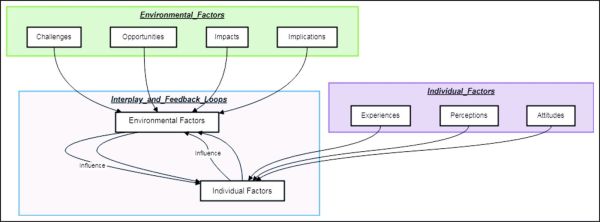
The suggested matrix offers a robust framework for examining the interaction between individual and environmental elements. Nevertheless, to construct a more all-encompassing socio-cognitive model, it is imperative to enhance the interconnections among these components and consider the ever-changing nature of these associations (Figure 1).
Proposed Socio-cognitive Model. Model name:
Socio-cognitive Dynamics of Online Learning for Bangladeshi Business Students (Figure 2)
Core components:
Interplay and feedback loops:
Visual Representation
Figure 1. Socio-cognitive Dynamics of Online Learning.
Key Relationships
Figure 2. Categorical Students’ Socio-cognitive Dynamics in Online Learning.
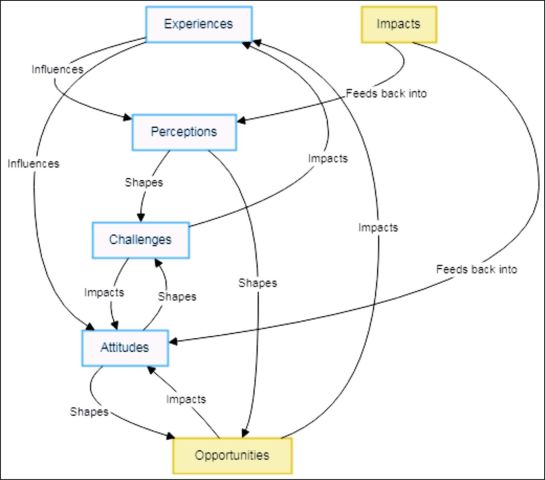
Core concept: The model explores how individual factors (experiences, perceptions, attitudes and learning styles) interact with environmental factors (challenges and opportunities) to shape students’ online learning experiences and outcomes.
Matrix Structure and Explanation
Matrix Structure
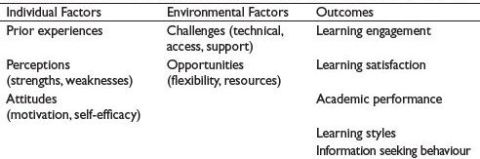
Table 1. Matrix Structure for Students’ Socio-cognitive Dynamics in Online Learning.
Matrix for Students’ Socio-cognitive Dynamics in Online Learning
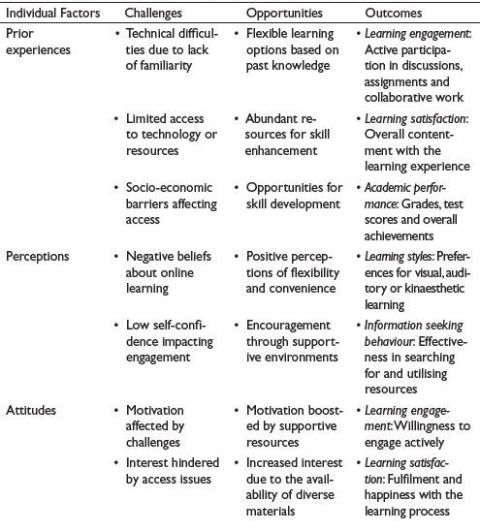
Table 2. Matrix for Students’ Socio-cognitive Dynamics in Online Learning.
This matrix examines the interaction between human and environmental elements in influencing students’ online learning experiences (Table 1).
Interplay Analysis
Explanation of the Model: This matrix offers a systematic approach to examining the intricate interaction between human and environmental elements that influence students’ experiences with online learning (Table 2).
Interplay: The matrix emphasises the dynamic link between these components. For example, perceptions are shaped by past experiences, and perceptions affect how pupils respond to challenges and opportunities. Similar to how contextual elements like obstacles can impact students’ motivation and attitudes, they can also impact learning outcomes.
This matrix is used as a basis for analysing qualitative data and finding important patterns and interactions between the variables (Figure 3). It can also be utilised to create research hypotheses and guide designing interventions that improve the quality of online learning opportunities.
Applying the Model to the Research Findings.
Based on the findings of the study, we can input the model with concrete instances:
Figure 3. Students’ Socio-cognitive Dynamics in Online Learning.
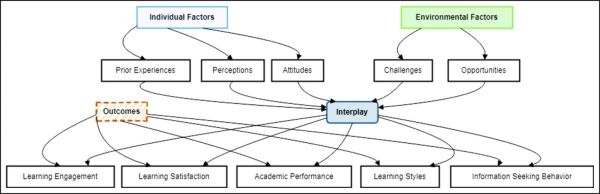
We can identify key patterns and relationships by mapping the findings onto the model. For instance, we can see how students’ lack of experience with online learning (individual factor) influenced their perceptions of challenges (environmental factor), which in turn impacted their motivation (individual factor).
Further Analysis.
Using this model, research questions like: How do students’ perceptions of the difficulties of online learning relate to their past academic performance? Can be developed.
What connection exists between students’ chosen online learning activities and their learning styles?
What is the effect of institutional support for online learning on student outcomes?
By iteratively improving the model based on new data, we can better comprehend the various elements impacting students’ online learning experiences.
Conclusion
Summary of Key Findings and Contributions to the Field
This study examined the socio-cognitive dynamics of online learning among Bangladeshi business students. Significant findings show that although students like the adaptability and accessibility of online learning, they also voice concerns about the absence of in-person interactions, technological issues and trouble staying motivated. These difficulties were made worse by the COVID-19 pandemic, which also brought attention to the advantages of online learning.
This study adds to the limited knowledge about online education in Bangladesh by shedding light on the students’ viewpoints and experiences. It provides a comprehensive grasp of the elements affecting their learning, which is essential for creating successful online business education courses.
Implications for Educational Practice and Policy
Several suggestions are made to improve the virtual education that Bangladeshi business students receive. First and foremost, educational institutions must invest significantly in a robust technology infrastructure and offer teachers and students extensive training. Second, a mixed learning strategy that combines the best aspects of in-person and virtual learning may be investigated. Third, it is crucial to provide a friendly online learning environment through peer-to-peer exchanges, interactive tools and frequent faculty–student communication.
To guarantee fair access to online education, policymakers should prioritise broadband access and the development of digital infrastructure. Policies that encourage faculty growth and online pedagogy research are also significant.
Final Thoughts on the Importance of Understanding Students’ Socio-cognitive Dynamics in Online Learning
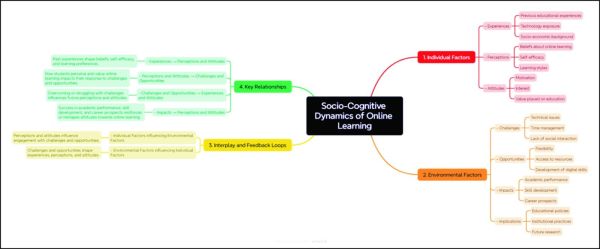
Gaining a deep understanding of the social and cognitive dynamics of students is crucial for creating online learning experiences that are both successful and inclusive. By examining students’ perspectives, difficulties and possibilities, educators and policymakers can provide a learning environment that accommodates various requirements and optimises student achievement. This study emphasises the significance of ongoing research and adjustment in the changing realm of online learning (Figure 4).
Figure 4. Mind Map of Students’ Socio-cognitive Dynamics in Online Learning.
Declaration of Conflicting Interests
The authors declared no potential conflicts of interest with respect to the research, authorship and/or publication of this article.
Funding
The authors received no financial support for the research, authorship and/or publication of this article.
ORCID iDs
Jayanta Fakir https://orcid.org/0000-0002-9377-9513
Rumpa Mittro https://orcid.org/0000-0002-3948-6971
Md. Karimul Alam https://orcid.org/0009-0001-7934-3115
Ahmed, M. A., & Islam, M. A. (2016). Challenges and opportunities of online learning in higher education in Bangladesh. International Journal of Information and Communication Technology Education, 12(1), 58–67.
Al-Dmour, H. (2011). Challenges and opportunities of e-learning: A review of the literature. International Journal of Instructional Technology and Distance Learning, 8(3), 23–38.
Anderson, T., & Dron, J. (2011). Three generations of distance education pedagogy. The International Review of Research in Open and Distributed Learning, 12(3), 80–97.
Bandura, A. (1977). Social learning theory. Prentice-Hall.
Bandura, A. (1997). Self-efficacy: The exercise of control. Freeman.
Bonk, C. J., & Graham, C. R. (2006). The handbook of blended learning: Global perspectives, local innovations. Pfeiffer.
Braun, V., & Clarke, V. (2006). Using thematic analysis in psychology. Qualitative Research in Psychology, 3(2), 77–101.
Creswell, J. W. (2014). Research design: Qualitative, quantitative, and mixed methods approaches. Sage Publications.
Davis, F. D. (1989). Perceived usefulness, perceived ease of use, and user acceptance of information technology. MIS Quarterly, 13(3), 319–340.
Dhawan, S. (2020). Online learning: A Panacea in the time of COVID-19 crisis. Journal of Educational Technology Systems, 49(1), 5–22. https://doi.org/10.1177/0047239520934018
Dziuban, C. D., Hartman, J., Graham, C. R., & Dziuban, E. (2018). Blended learning: A defining moment in higher education. EDUCAUSE Review, 53(1), 36–47.
Garrison, D. R., Anderson, T., & Archer, W. (2000). Critical Inquiry in a text-based environment: Computer conferencing in higher education. The Internet and Higher Education, 2, 87–105. http://dx.doi.org/10.1016/S1096-7516(00)00016-6
Hossain, M. A., & Islam, M. A. (2018). Challenges and opportunities of online education in Bangladesh: A review. International Journal of Information and Education Technology, 8(1), 1–7.
Howard, J., Whitton, N., Weston, S., & Rogers, P. (2020). Emergency remote teaching in higher education: A rapid response to the COVID-19 pandemic. Journal of Online Learning and Teaching, 6(2), 242–252.
Islam, M. A. (2015). Higher education in Bangladesh: Challenges and opportunities. International Journal of Higher Education, 4(2), 117–124.
Kvale, S., & Brinkmann, S. (2009). Interviews: An introduction to qualitative research interviewing. Sage Publications.
Lincoln, Y. S., & Guba, E. G. (1985). Naturalistic inquiry. Sage Publications.
Means, B., Toyama, Y., Murphy, R., Bakia, M., & Jones, K. (2010). Evaluation of evidence-based practices in online learning: A meta-analysis and review of online learning studies. US Department of Education.
Patton, M. Q. (2002). Qualitative research and evaluation methods. Sage Publications.
Rahman, M. M., & Islam, M. A. (2019). Challenges and opportunities of online education in Bangladesh: A review. International Journal of Information and Education Technology, 8(1), 1–7.
Rovai, A. P. (2002). Building online learning communities: A research agenda. Journal of the American Society for Information Science and Technology, 53(13), 1201–1211.
Sankey, M., & Lucassen, B. (2013). Online learning in developing countries: A systematic review and meta-analysis of the literature. International Review of Research in Open and Distributed Learning, 14(6), 133–162.
Schunk, D. H. (2012). Learning theories: An educational perspective. Pearson.
Siemens, G. (2004). Connectivism: Learning as network creation. Journal of Educational Technology & Society, 6(1), 3–6.
Swan, K. (2003). Building learning communities in online courses: A case study. The Internet and Higher Education, 6(1), 23–40.
UNESCO. (2020). COVID-19 educational disruption and response.
Zimmerman, B. J. (2002). Self-regulated learning and academic achievement: An overview. Journal of Applied Developmental Psychology, 23(1), 3–17.
